Content Attributes
Recreating Revolutionary War battles on a computer requires more than accurate maps and period uniforms. A credible simulation must connect geography, movement, command, supply, and morale to decisions made under pressure. Historical accuracy appears when those systems produce outcomes that reflect the limits faced by actual commanders. American Revolutionary War examines that standard through scenarios, campaigns, and tools that let players test the war’s military problems. The game’s structure shows where a computer recreation gains credibility.
Players judge a historical game by its decisions, not by its artwork. A useful American war for independence strategy simulation connects battlefield geography with orders, timing, and force limits. That connection matters because commanders rarely had complete information, reliable communications, or unlimited replacements. A scenario becomes credible when those constraints shape choices before combat begins, rather than appearing only in background text.
What Accuracy Means in a Battle Simulation?
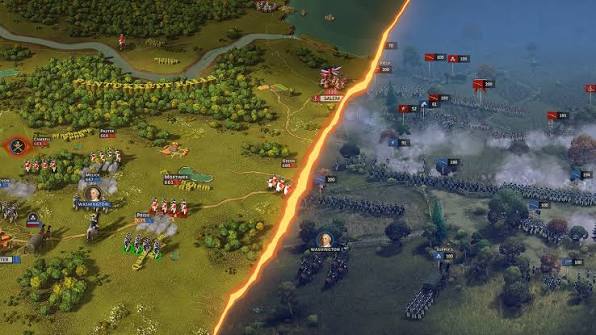
Accuracy starts with the map. A river crossing, a ridge, or a town changes movement and visibility. The game includes major locations and lesser-known sites across the conflict. That range lets players compare operations in New England, the Hudson corridor, the frontier, and the southern theater. Terrain controls approach routes.
Historical scale depends on the order of battle. The game includes forces from the armies involved, with added formations for hypothetical situations. Players must consider command quality, troop strength, and each formation’s role. Those limits tie tactical choices to available forces on the map.
How Scenarios Test Command?
Scenario design determines whether history becomes a decision problem. The game includes 148 stand-alone scenarios, including three tutorials and specialized versions for head-to-head play and computer opponents. An additional 37 scenarios appear in the campaign section. This spread supports short engagements, larger operations, and linked strategic play. Players can examine why a force advanced or withdrew.
A campaign adds pressure because early decisions affect later positions. Four campaigns connect battles across changing conditions. A commander must protect routes, preserve formations, and choose when to accept an engagement. A victory at one location does not settle the war when supplies or political aims point elsewhere.
Command, Information, and Friction
Revolutionary commanders faced delayed orders, uncertain reports, and difficult coordination. A computer recreation can model the consequences of limited information. Scenarios force players to act before every fact becomes clear. That matters at Long Island, Trenton, Saratoga, Camden, and Cowpens, where timing and concentration shaped results. Play against the computer by email, through a local network, online, or in a hot seat.
Morale and political purpose shape operations. The American side begins as a resistance movement and later fights for independence. British commanders seek restored control, while loyalist support varies by region. Foreign intervention changes the balance after France enters the conflict. A faithful simulation must make alliances, naval access, and regional support matter to campaign outcomes. That connection changes the value of a victory far beyond its battlefield result.
Tools for Testing the Model
Editors let players inspect how a battle is constructed. The scenario and campaign editors support custom situations, while the sub-map function divides a main map into smaller segments. Players can test a narrow crossing, local raid, or alternate deployment without rebuilding an entire theater. Design notes explain the production process, campaign notes, and a bibliography lists sources used by the design team. The result remains testable in replay.
A historical game needs repeatable results. If a river crossing fails because a formation lacks strength or the route exposes it to fire, the result teaches a usable lesson. An unexplained failure damages historical trust. Manuals, quick reference material, and getting started guidance help players check rules before changing a scenario.
Technical Details and Scope
The listed version is 4.06.3, with a 593 MB download and 1.5 GB of required disk space. It requires Windows 10 or 11, a 2 GHz processor, 8 GB memory, and 512 MB video memory. Fulfillment occurs through direct download. The listed price is $39.95. Checking system requirements before purchase prevents setup problems.
Conclusion
Accuracy in a Revolutionary War simulation rests on the relationship between information, geography, force structure, and time. The inspected game provides a practical way to test that relationship through 148 scenarios, four campaigns, historical maps, editors, and documented design notes. A useful next step is to choose one familiar battle, record the available forces and objectives, then replay it under a different command plan. That comparison shows whether the simulation produces decisions with historical weight.




Leave a Reply
You must be logged in to post a comment.