Content Attributes
If you’ve ever arrived at your destination with damp clothes, a wet laptop sleeve, or a musty-smelling towel, you already know why a waterproof duffel bag matters. Rain, boat spray, muddy ground, and sudden weather changes don’t care if you packed carefully. The right bag keeps your gear dry and stress low—whether you’re traveling, commuting, heading to the gym, or doing outdoor work.
But here’s the tricky part: many bags are water resistant duffel bag styles (they handle light rain), while fewer are truly waterproof (they can take heavy rain and splashes, and some even handle brief submersion depending on design). Real “waterproof” comes down to construction: materials like TPU/PVC, welded seams, and waterproof zippers or roll-top closures are the biggest signs.
Below is a clear, practical guide (based on the patterns and recommendations that show up across top buying guides and brand specs) to help you choose the best waterproof duffel bag for your needs—without confusing terms.
What a Waterproof Duffel Bag Really Means?
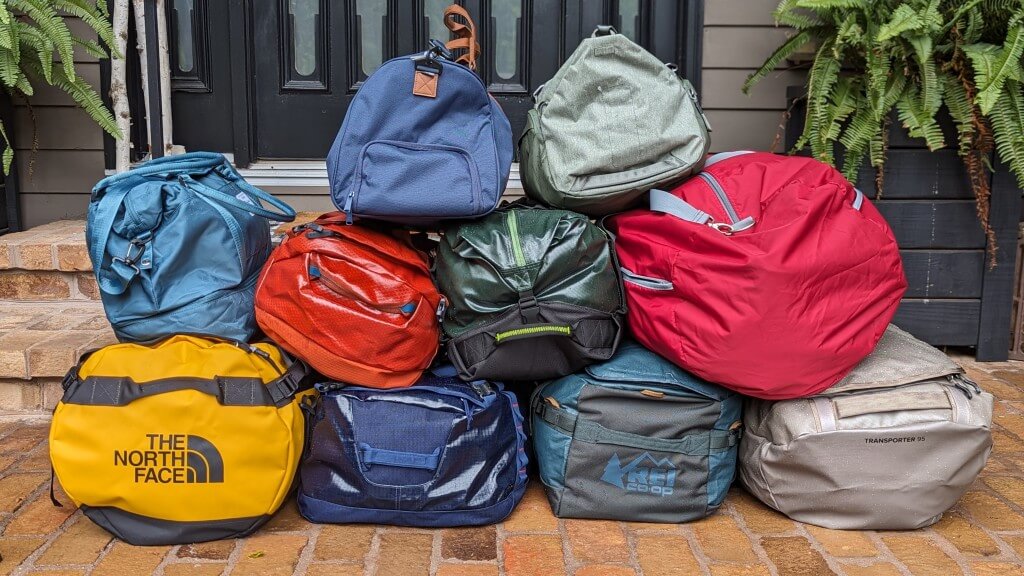
When a product listing says “waterproof,” it can mean different things. That’s why people often buy a bag expecting full protection, then get disappointed in real rain. Let’s make it simple.
Waterproof vs. water resistant (plain-English difference)
- A water resistant duffel bag usually handles light rain and splashes for a short time. Water may bead off at first, but long exposure can soak through seams, zippers, or fabric.
- A waterproof duffel bag is built to block water from entering the main compartment in heavy rain or wet environments. The best ones use waterproof materials and construction methods that prevent leaks at the seams and closure points.
Why seams and closures matter more than marketing?
Even if the fabric is waterproof, water can still get in through:
- stitched seams (tiny needle holes)
- standard zippers
- open gaps around the lid
That’s why truly waterproof designs typically use welded seams (or seam sealing) and either a waterproof zipper or roll-top closure.
Materials you’ll see most often
Many high-protection duffels use coated fabrics like TPU or PVC. TPU is often described as more flexible and durable (especially in cold), while PVC is often cheaper but can feel stiffer.
You’ll also see “weather-resistant” duffels (like popular travel duffels) that use tough fabrics with TPU film laminates and water-repellent coatings—great for rain and rough handling, but not always designed for submersion. For example, Patagonia’s Black Hole line is described as weather- and abrasion-resistant with a TPU-film laminate.
What “submersible” means (and when you need it)?
Some premium bags are designed to be “submersible,” meaning they can keep contents dry even if briefly underwater—when closed correctly. YETI states its Panga duffel bags is tested to IPX7, which (as they describe) means protection against water immersion for 30 minutes at 1 meter.
Do you need that level? Only if you’ll be around boats, rafting, heavy storms, or situations where the bag might fall into water. Otherwise, a high-quality waterproof duffel bag that survives heavy rain and wet ground may be enough.
Quick takeaway: A waterproof duffel bag isn’t just “thick fabric.” It’s a system: material + seams + closure. If any one of those is weak, water finds a way.
Key Features That Make the Best Waterproof Duffel Bag (Checklist You Can Use)
If you want to buy duffle waterproof bag options confidently, use this checklist. It’s the same set of ideas that repeat across serious buying guides and manufacturer specs: materials, seams, closures, durability, and carrying comfort.
A) Waterproof fabric and coating
Look for terms like:
- TPU laminated / TPU-coated fabric
- PVC tarpaulin
- vinyl / heavy-duty coated nylon
TPU is commonly highlighted for being flexible and tough, while PVC is common in budget waterproof gear.
If the listing only says “water-repellent,” that’s usually closer to a water resistant duffel bag than a truly waterproof duffel bag.
B) Welded seams (or properly sealed seams)
This is one of the biggest indicators. Welded seams mean panels are bonded so water can’t pass through stitch holes. Guides that explain how to spot waterproof bags consistently call out welded/sealed seams as a must-have.
C) Closure system: waterproof zipper vs roll-top
Waterproof zipper (airtight style):
- Fast access
- Great for travel
- Usually found on premium, truly waterproof duffel bag models
(Some brands also give closing instructions because zipper alignment matters.)
Roll-top closure:
- Very reliable for water protection
- Common in dry bags
- Slightly slower to open/close
Older and newer guides both note roll-top closures as a strong option when you need serious water blocking.
D) Durability details (the part people ignore)
A waterproof duffel bag often gets used in rough conditions. Check for:
- thick fabric denier (higher often = tougher, but not always)
- abrasion-resistant panels on the bottom
- reinforced handles and anchor points
- strong D-rings and strap hardware
This is where “travel duffels that are weather-resistant” can still be excellent—because many are built for abrasion and heavy handling even if they’re not submersible. Patagonia’s Black Hole fabric is specifically positioned as weather- and abrasion-resistant.
E) Comfort and carrying options
Even the best waterproof duffel bag becomes annoying if it’s painful to carry. Look for:
- padded shoulder strap
- backpack straps (helpful for airports, hikes, parking-to-cabin walks)
- balanced grab handles (end handles are underrated)
F) Size and capacity that match your use
Common sizes:
- 30–45L: gym, daily carry, short trips
- 50–70L: weekend travel, mixed gear
- 80–110L: long trips, bulky gear, group packing
Many “best of” roundups include multiple sizes because the “best waterproof duffel bag” depends heavily on what you carry.
G) Smart organization (without ruining waterproofing)
Extra outer pockets can be useful, but they often reduce waterproof protection unless they’re also sealed. A simple approach:
- one big waterproof main compartment
- a small internal mesh pocket for keys/wallet
- use separate dry sacks for small items if needed
Fast checklist (save this):
- ✅ TPU/PVC or coated waterproof fabric
- ✅ welded/sealed seams
- ✅ waterproof zipper or roll-top
- ✅ tough bottom + reinforced handles
- ✅ comfortable strap system
- ✅ correct size for your trip
How to Choose the Right Waterproof Duffel Bag for Your Use Case?
Here’s the truth: the “best waterproof duffel bag” for a person who flies twice a month is different from the best waterproof duffel bag for rafting, and both are different from what most people need for daily commuting.
A) For travel (airport + hotel + unpredictable weather)
For travel, you want:
- easy access (wide opening)
- comfortable straps for walking
- tough fabric for baggage handling
- strong water protection for rain, wet sidewalks, and taxi trunks
A lot of travelers do well with a “highly weather-resistant” duffel (sometimes marketed as waterproof). Just be honest about your risk level: if you’re mostly dealing with rain and wet ground, you don’t always need submersible protection. If you travel in monsoon-like rain or do boat transfers, you may want a truly waterproof duffel bag with a waterproof zipper or roll-top.
B) For gym and daily commuting
If your biggest threats are:
- rain from car to gym
- wet locker room floors
- water bottle spills
…a water resistant duffel bag can work. But if you carry electronics or you walk/ride a lot in the rain, a waterproof duffel bag gives peace of mind. Difference-making features here:
- easy-clean interior
- smell resistance (air it out)
- simple organization for shoes and clothes
C) For outdoor sports (camping, fishing, beach, overlanding)
Outdoor trips add:
- sand
- mud
- rough ground
- frequent wet-dry cycles
In these cases, a waterproof duffel bag made with TPU/PVC and welded seams is a strong choice because it can be wiped clean and doesn’t soak up water. TPU is often discussed as more flexible and durable, while PVC is common for budget gear.
D) For boating, rafting, and heavy-water environments
This is where “submersible” matters. If the bag could:
- fall into water
- sit in pooled water
- get hit by constant spray
…look for a waterproof duffel bag designed for immersion, plus a closure system that’s made for it. YETI describes IPX7 testing for its Panga line (when properly closed), which is the kind of detail you want when water exposure is serious.
E) Choosing the right size (simple method)
Instead of guessing liters, do this:
- Put your “typical load” on the bed/floor (clothes, shoes, toiletries, gear).
- Add one extra layer (jacket or towel).
- If you often bring gifts/extra items, add 15–20% space.
Then choose:
- 40L if it’s mostly clothes + toiletries
- 60–70L if you add shoes, jackets, or gear
- 90L+ if you carry bulky items (sleeping bag, fins, helmets)
F) Budget vs premium: what you’re really paying for
Typically, higher prices buy:
- better waterproof zippers
- tougher materials (often TPU builds)
- stronger seam welding
- better straps/hardware
Lower-cost options can still work if:
- you mainly need rain protection
- you’re okay using inner dry sacks for extra safety
Tip that saves money: If you only need rain protection, a durable water resistant duffel bag + 1–2 lightweight dry sacks can be a smart setup. If you need “everything stays dry no matter what,” then spend on a true waterproof duffel bag with welded seams and a reliable closure.
Packing, Care, and Real-World Tips to Make Your Waterproof Duffel Bag Last
Buying a waterproof duffel bag is only half the story. How you pack it, close it, and care for it makes a huge difference in real life—especially if you want years of use.
A) Pack to protect the zipper and seams
Overstuffing is the fastest way to stress:
- waterproof zippers (harder to close, can misalign)
- seam welds (extra tension on corners)
Better approach:
- keep the top area flexible so the closure seals properly
- place soft items (clothes) near the closure
- place hard items (tools, chargers) toward the center
B) Use simple internal organization (without losing waterproofing)
Many people want pockets everywhere, but pockets add seams and zippers—weak points for water. A clean waterproof duffel bag works best with:
- 1–2 internal pouches for small items
- a shoe bag or washable pouch
- a small dry sack for electronics (even inside a waterproof duffel bag, it’s a nice backup)
C) Closing tips (especially for waterproof zippers and roll-tops)
Waterproof zipper bags:
- close slowly and fully
- don’t force it at an angle
- keep the zipper track clean
Brands that design for submersion often emphasize “properly closed” because that’s what makes the seal work.
Roll-top bags:
- push air out first
- roll at least 3–4 times
- clip the ends firmly
D) Cleaning (quick and safe)
After beach, mud, or rain:
- rinse with clean water (especially zippers and buckles)
- wipe the inside with a damp cloth
- air dry fully before storage
Avoid long direct-sun drying if you can—heat and UV can age materials over time (some guides note PVC can become brittle faster with exposure).
E) Storage (how to prevent smells and sticking)
- store unzipped / slightly open so moisture can escape
- don’t store while damp (most odor problems start here)
- keep it in a cool, dry place
Quick FAQ (common questions)
Not always. Weather-resistant duffels can be excellent for travel rain protection, but true waterproofing usually needs welded seams and a waterproof closure system.
TPU is often described as more flexible, durable, and resistant to cracking (especially in cold), while PVC is often cheaper and common in budget waterproof gear.
Pick your size first, then insist on: waterproof fabric + welded seams + waterproof zipper or roll-top. That combo is the core of a reliable waterproof duffel bag.
Final Word
A waterproof duffel bag is one of those purchases you appreciate most when conditions get ugly: heavy rain, wet boats, muddy ground, or packed travel days. If you want the best waterproof duffel bag, focus less on hype words and more on build quality—TPU/PVC-type waterproof materials, welded seams, and a real waterproof closure. Then match the size and carry style to your routine, and it’ll serve you for years.