
Content Attributes
The Lewis Pride helmet became one of the most talked-about helmet designs in Formula 1 because it was more than racing gear. It became a message. When fans search for this term, they usually want to know what the helmet looked like, why Lewis Hamilton wore it, what message it carried, and why it got so much attention across motorsport and beyond. That is why this guide focuses on the story, symbolism, and racing context behind the helmet, instead of treating it like a normal product page.
Lewis Hamilton used the helmet to show support for LGBTQ+ rights at a time when Formula 1 was racing in places where those rights were under heavy debate. In 2021, Reuters reported that Hamilton wore a rainbow-colored Progress Pride helmet in Qatar after speaking publicly about equal rights and scrutiny around some host countries. He later said he planned to wear it again in Saudi Arabia as well. Those moments helped turn the Lewis Pride helmet into a symbol of support, visibility, and courage.
The design returned in a fresh form in 2024 at the Spanish Grand Prix, where Hamilton wore a new rainbow-themed helmet carrying the message “Love is Love.” That newer version showed that this was not a one-time gesture. It had become part of a broader public stance connected to inclusion, equality, and representation. This is one of the main reasons the topic keeps getting searched and shared by fans, sports writers, and general readers.
What Is the Lewis Pride Helmet?
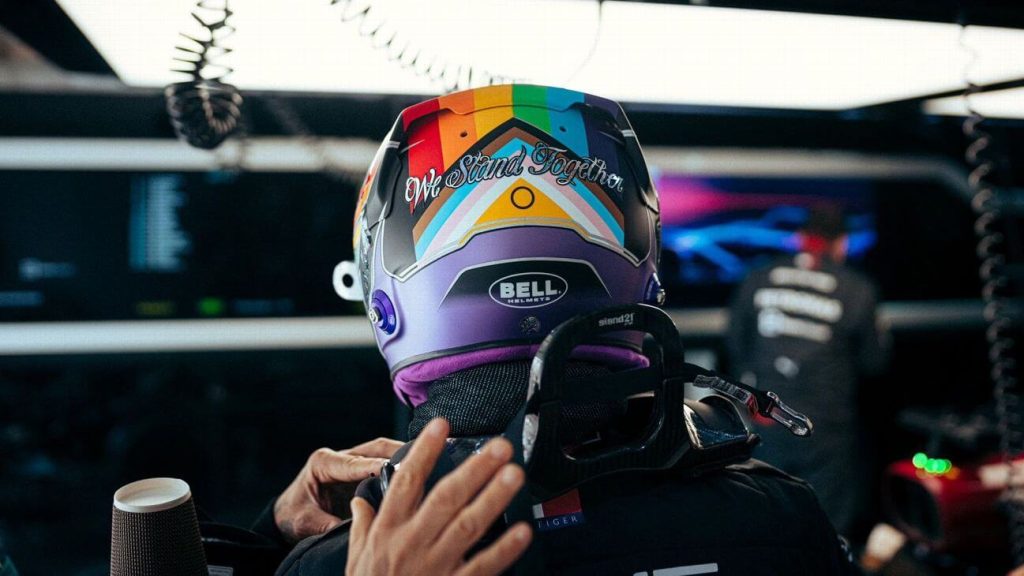
The Lewis Pride helmet refers to the special helmet designs worn by Lewis Hamilton to express support for the LGBTQ+ community. The version most people first remember is the 2021 design used around the Qatar Grand Prix. That helmet featured colors inspired by the Progress Pride flag, not just the classic rainbow stripes. Sky Sports noted that the Progress Pride flag includes the traditional rainbow while also adding chevrons that recognize wider diversity within the LGBTQ+ community, including trans and intersex representation. That detail matters because it shows the design was thoughtful and specific, not random decoration.
In Qatar 2021, Hamilton’s helmet quickly became a major talking point because it appeared in a high-pressure Formula 1 environment, during a weekend when he had already spoken about equal rights. Reuters reported that he wore the helmet during practice, and later confirmed he intended to keep using it in Saudi Arabia too. That decision made the helmet part of a larger conversation about the sport’s global calendar, social responsibility, and how athletes use their visibility.
The helmet stood out visually because it mixed bright rainbow colors with a darker base and racing branding. Some versions and replica descriptions also show phrases such as “We Stand Together” and “Love is Love,” which reinforced the message even more clearly. While fans may remember the visual first, the reason it stayed important was the way the design connected racing, identity, and advocacy in one object.
Another reason the search interest remains strong is that the helmet is tied to memorable race weekends. Hamilton did not just wear it quietly in the background. It appeared during competitive sessions, media coverage, and race discussions, which gave it global exposure. That made the Lewis Pride helmet different from a fan-made concept or merchandise item. It was seen on one of the biggest stages in world sport.
Today, when someone types “lewis pride helmet” into Google, they are usually looking for one of four things: the meaning behind it, the design details, the races where it appeared, or the reason it became so famous. Top-ranking articles and coverage tend to answer those exact questions. That is why an effective article on this keyword should explain the helmet in clear language, connect it to real race events, and show why it still matters.
Why Lewis Hamilton Wore the Pride Helmet?
Lewis Hamilton wore the Pride helmet because he wanted to make a visible statement in support of LGBTQ+ rights. That purpose is important because it shapes the entire meaning of the helmet. Reuters explained that the helmet appeared after Hamilton had spoken about equal rights and the need to think seriously about where the sport races. In other words, the helmet was not only about style. It was a public expression connected to values and current issues in Formula 1.
The context made the gesture even stronger. Qatar and Saudi Arabia were major talking points because of laws and social conditions affecting LGBTQ+ people. When Hamilton wore the Progress Pride helmet in those settings, it drew a lot of attention because he was using one of the most visible symbols in his race kit to say something clear. Sky Sports reported that he hoped the helmet would spark positive conversation and change. That helps explain why fans, journalists, and advocacy groups reacted so strongly.
Later, Hamilton admitted that wearing the helmet in Qatar was “nerve-wracking.” That admission adds weight to the story. It shows the helmet was not an easy publicity move. There was real personal pressure behind it. RaceFans and Sky Sports both reported that Hamilton spoke about his fears and about the importance of standing up for what he believed in. That honesty made the helmet feel more human and more credible.
This matters for readers because search intent here is not only visual. People also want to understand the message. The reason the Lewis Pride helmet continues to trend in search is that it sits at the meeting point of sport, culture, and identity. It is remembered not only because it looked beautiful, but because it represented support in places where that support carried meaning. That is also why headlines from Reuters, ESPN, Sky Sports, and Outsports framed it as a statement, not just a helmet design story.
In 2024, the message continued when Hamilton wore a Pride-themed helmet at the Spanish Grand Prix with “Love is Love” on it. That return showed consistency. It told fans this was not just a moment from 2021. It was part of Hamilton’s ongoing public support. For readers and searchers, that gives the keyword more depth. The helmet is not just famous because of one weekend. It is part of a longer story about how one of Formula 1’s biggest drivers chose to use design as a form of expression.
Design, Colors, and Symbolism of the Lewis Pride Helmet
The design of the Lewis Pride helmet is one of the main reasons it became so memorable. Formula 1 helmets are already personal, but this one stood out because it combined strong color contrast with a clear social message. The 2021 version used the Progress Pride color scheme, blending rainbow tones with added shapes and symbols that point to broader inclusion. Sky Sports specifically noted that the design included elements connected to the intersex flag as well. That made the helmet feel carefully built around representation rather than just using rainbow colors in a general way.
Visually, the helmet worked because it was bold from every angle. Front views showed bright vertical color bands and Hamilton’s race number 44, while side and rear views highlighted rainbow sections, stars, and messaging such as “We Stand Together” or “Love is Love” on different versions and presentations. Replica listings and race images reinforce these design features. Even when sponsor logos remained visible, the meaning of the helmet stayed unmistakable.
The darker purple and black tones around the shell helped the rainbow colors pop even more. That gave the helmet a premium, dramatic look that matched Hamilton’s usual design style. Many fans remember it as one of his strongest helmets because it balanced aesthetics and message so well. The design looked fast, modern, and emotional at the same time. That is rare, and it helps explain why the helmet remains highly shareable in articles, fan discussions, and image searches.
The symbolism also mattered. In racing, helmets often reflect nationality, personal identity, or sponsor culture. Hamilton’s Pride helmet went further. It used the helmet as a statement platform. Because drivers wear helmets in every session and every camera angle, the message traveled everywhere: pit lane, onboard footage, media interviews, highlight packages, and social media. The helmet became a visual shortcut for what Hamilton was standing for that weekend. That is a major reason the keyword has lasting SEO value. People are not only searching for a design. They are searching for a symbol with a story behind it.
The 2024 Spanish Grand Prix version added a fresh layer. Reports described a helmet using the traditional six-stripe Pride colors with the words “Love is Love.” That simpler message made it easy for viewers to understand immediately. It also showed how Hamilton adapted the idea over time without losing the core meaning. From an article-writing perspective, this gives you useful subtopics: 2021 design, 2024 design, symbolism, flag meaning, and why the visuals worked so well on a Formula 1 helmet.
Why the Lewis Pride Helmet Still Matters Today?
The Lewis Pride helmet still matters because it remains one of the clearest examples of an athlete using personal equipment to make a public statement. Many sports moments disappear quickly, but this one stayed alive because it connected performance, identity, and timing. Hamilton wore the helmet during big Formula 1 weekends, in front of a worldwide audience, while also speaking openly about equal rights. That combination gave the design lasting meaning.
It also matters because it changed how people talk about helmets in Formula 1. Normally, fans discuss color schemes, sponsor placements, or special-edition race graphics. With the Lewis Pride helmet, the conversation went deeper. Media outlets focused on advocacy, inclusion, and courage. That shift shows how motorsport design can carry cultural importance far beyond branding. It turned the helmet into a discussion point for people who do not usually follow technical racing details.
Another reason it remains important is consistency. Hamilton did not leave the idea in the past. The return of a Pride-themed helmet in 2024 at the Spanish Grand Prix showed that his message was ongoing. Outsports and PinkNews both highlighted the newer helmet and its “Love is Love” wording, linking it back to the earlier Qatar moment. That continuity matters because it transforms a one-weekend headline into a longer public commitment.
For fans, the helmet is memorable because it paired message with success. Hamilton’s 2021 Qatar weekend was not only symbolic. It was competitive and visible. That race exposure helped the design become iconic. It is easier for fans to remember a helmet when it appears during meaningful on-track moments. That is why replica markets, fan art, social posts, and collector interest still circle around it years later.
From an SEO point of view, the keyword works because it serves multiple reader intents at once. A reader may want biography-style context, race history, design analysis, symbolism, or image inspiration. This makes the topic strong for long-form content. The most useful article is one that answers all those layers in plain English. That is also how you build trust: explain the facts clearly, stay close to real reporting, and avoid turning the topic into clickbait. The helmet matters today because it was not just beautiful. It meant something, and people still remember why.
Quick Facts About the Lewis Pride Helmet
- It is most strongly associated with Lewis Hamilton.
- The best-known early version appeared during the 2021 Qatar Grand Prix weekend.
- Hamilton said he also planned to wear it in Saudi Arabia.
- The design used Progress Pride elements, not just a standard rainbow.
- A newer Pride-themed version appeared at the 2024 Spanish Grand Prix with “Love is Love.”
- The helmet became famous because it combined visual impact with a clear social message.
Conclusion
The Lewis Pride helmet is much more than a memorable Formula 1 helmet design. It is a symbol of support, visibility, and personal conviction. Lewis Hamilton used it to say something meaningful on one of the biggest stages in sport, first through the Progress Pride-inspired design in 2021 and then again through the “Love is Love” version in 2024. That is why people keep searching for it, sharing it, and writing about it.
For readers, the helmet stands out because it joins three powerful things together: bold design, real-world context, and a clear human message. That mix gives the topic lasting value. It is visually striking, emotionally meaningful, and historically tied to important Formula 1 moments. In simple words, the Lewis Pride helmet became famous because it looked powerful and stood for something bigger than racing.