Does your dog often experience loose stools, excessive gas, vomiting, or discomfort after eating? These symptoms may suggest digestive sensitivity. However, they can also indicate a medical condition that needs veterinary attention. Choosing the best dog food for sensitive stomachs can help some dogs maintain more comfortable digestion and consistent bowel movements. The challenge is finding a formula that matches your dog’s needs rather than simply choosing a product labeled “sensitive stomach.”
Some dogs do well with easily digestible proteins and rice. Others need a particular fiber balance, a lower-fat diet, or a veterinary therapeutic formula. Dogs with confirmed food allergies may require an entirely different approach.
There are many choices available, including dry kibble, wet food, limited-ingredient diets, and veterinary gastrointestinal formulas. Understanding their differences is important because the most expensive product is not necessarily the most suitable.
In this guide, you will discover ten dog food options worth considering, the ingredients to look for, foods that may worsen digestive discomfort, and a step-by-step feeding plan. You will also learn when dietary changes are reasonable and when a veterinarian should investigate the symptoms.
Quick answer: For an otherwise healthy adult dog with mild digestive sensitivity, Purina Pro Plan Sensitive Skin & Stomach Salmon & Rice, Hill’s Science Diet Sensitive Stomach & Skin, and Royal Canin Digestive Care are useful starting options. Dogs with more serious digestive conditions may need prescription diets selected by a veterinarian. American Kennel Club+2
What Is a Sensitive Stomach in Dogs?
A sensitive stomach is a common description for a dog that experiences digestive problems more frequently than expected. It is not a specific medical diagnosis.
The symptoms may appear immediately after a meal, several hours later, or intermittently over multiple days.
Common signs of a sensitive stomach
- Frequent soft or loose stools
- Excessive gas or bloating
- Occasional vomiting
- Stomach gurgling or rumbling
- Reduced interest in meals
- Discomfort after eating
- Changes in stool frequency
- Difficulty tolerating certain treats or foods
These symptoms do not automatically mean that your dog has a food allergy. Parasites, intestinal infections, stress, dietary indiscretion, pancreatitis, and other digestive diseases can produce similar problems.
For example, a dog that develops diarrhea after eating leftover greasy meat may be reacting to the meal’s fat content rather than the type of protein.
Likewise, a puppy with repeated diarrhea may have intestinal parasites or an infection rather than a permanent food sensitivity.
A veterinarian can help separate temporary dietary upset from an underlying condition requiring testing or treatment.
What Causes Sensitive Stomachs in Dogs?
Understanding the cause is the first step toward finding suitable food for dogs with sensitive stomachs.
1. Sudden food changes
Switching brands or recipes overnight may upset digestion. The new food can contain different protein, fat, fiber, and carbohydrate levels.
Even a high-quality formula can cause loose stools if introduced too quickly.
2. Food intolerance
Some dogs do not tolerate particular ingredients or nutrient levels well.
For instance, a dog may develop diarrhea when eating a rich, high-fat recipe but produce normal stools on a more moderate-fat food.
3. Food allergies
A true food allergy involves an immune response to an ingredient, often a protein.
Affected dogs may develop digestive symptoms, itchy skin, recurring ear problems, or a combination of symptoms.
An elimination diet followed by a controlled food challenge is generally needed to confirm a food allergy. Changing from chicken to salmon without a structured trial does not establish the diagnosis. VCA Animal Hospitals
4. Too many treats or table scraps
Cheese, fatty meat, heavily seasoned leftovers, and frequent new treats can contribute to digestive upset.
Owners sometimes change a dog’s main food without realizing that daily treats are the actual trigger.
5. Digestive or medical conditions
Parasites, infections, chronic intestinal disease, pancreatic disorders, and other illnesses can cause recurring gastrointestinal symptoms.
If symptoms continue, a dog may require stool tests, blood tests, imaging, or other veterinary investigations.
10 Best Dog Foods for Sensitive Stomachs in 2026

The following options cover different needs, including mild digestive sensitivity, small breeds, puppies, wet-food preferences, suspected food allergies, and medically diagnosed gastrointestinal conditions.
They are not ranked by clinical effectiveness, and individual recipes vary by country and life stage. Always confirm the current product label before purchase.
Quick comparison table
| Dog food | Best suited for | Main consideration |
|---|---|---|
| Purina Pro Plan Sensitive Skin & Stomach | Everyday adult digestive sensitivity | Salmon and rice-based formula |
| Hill’s Science Diet Sensitive Stomach & Skin | Adult dogs with digestive and skin concerns | Prebiotic fiber |
| Royal Canin Digestive Care | Mild digestive sensitivity | Digestive support formulation |
| Purina Pro Plan Small Breed Sensitive Skin & Stomach | Small adult dogs | Small-breed formulation |
| Purina Pro Plan Puppy Sensitive Skin & Stomach | Growing puppies | Puppy-specific nutrition |
| Purina Pro Plan Sensitive Skin & Stomach Wet | Adult dogs preferring wet food | Higher moisture content |
| Natural Balance Limited Ingredient | Dogs needing simpler ingredient selection | Check all protein sources |
| Hill’s Prescription Diet i/d | Veterinary-managed digestive disorders | Therapeutic diet |
| Royal Canin Gastrointestinal Low Fat | Dogs requiring restricted dietary fat | Veterinary supervision |
| Hill’s Prescription Diet z/d | Suspected adverse food reactions | Hydrolyzed-protein diet |
1. Purina Pro Plan Sensitive Skin & Stomach Salmon & Rice — Best Everyday Starting Option
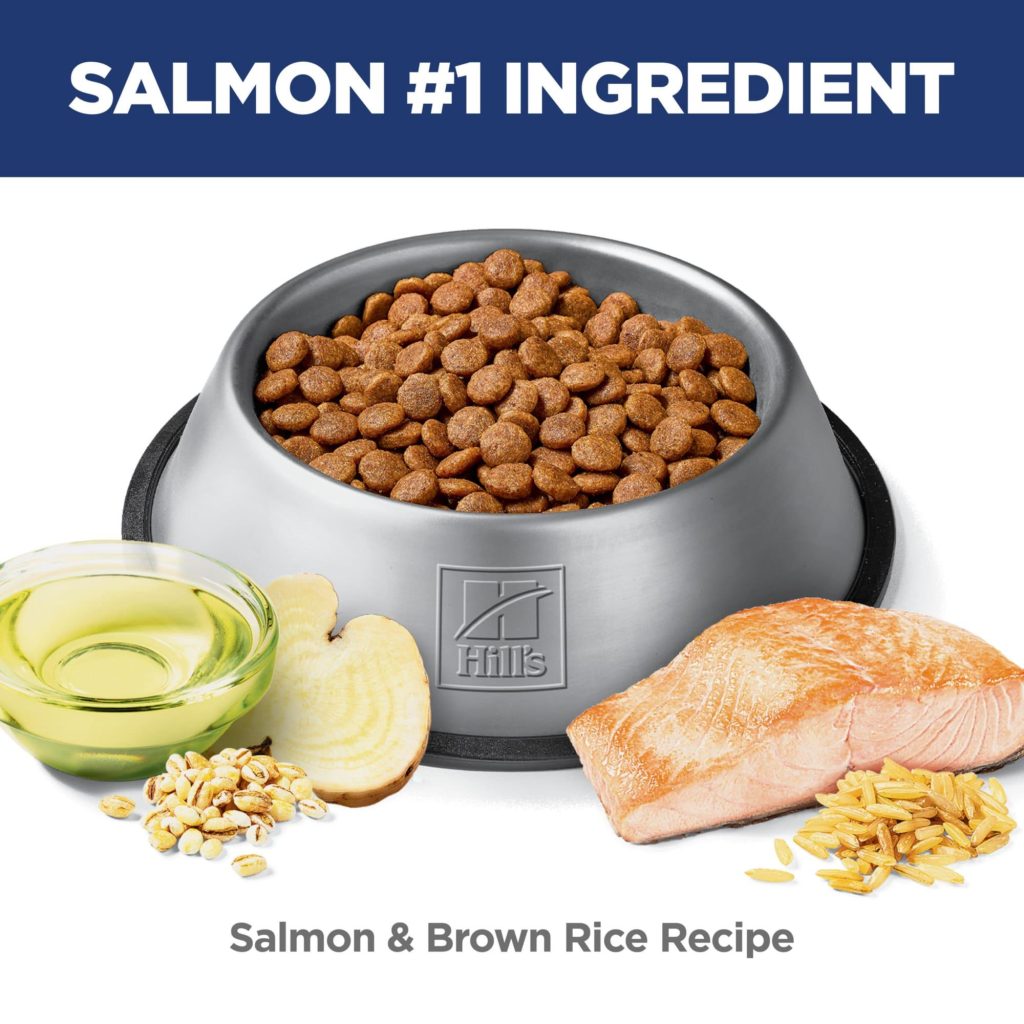
This formula includes salmon, rice, barley, oatmeal, and prebiotic fiber. It is designed to support digestion while also providing nutrients for skin and coat health.
The manufacturer identifies salmon as its first ingredient and lists oatmeal among the easily digestible components. The formula also contains fish oil and prebiotic ingredients that support intestinal bacteria. Shop Purina
Why consider it?
- Offers a clearly identified fish-based main protein.
- Includes rice and oatmeal.
- Contains prebiotic fiber.
- Provides complete nutrition for adult maintenance.
- Suitable for dogs that also need skin and coat support.
Potential limitation: This food contains multiple protein-related ingredients and beef fat. It is not a suitable substitute for a veterinary elimination diet when an allergy is suspected.
Best for: Otherwise healthy adult dogs with mild, recurring digestive sensitivity after medical problems have been ruled out.
2. Hill’s Science Diet Sensitive Stomach & Skin — Best for Digestive and Skin Support
This is another practical option for adult dogs needing digestible food with additional skin and coat support.
Many versions contain chicken-based ingredients, grains, prebiotic fiber, and fatty acids. The precise recipe depends on the product variant.
Why consider it?
- Formulated with digestibility in mind.
- Includes fiber to support beneficial gut bacteria.
- Available in different recipe and kibble-size options.
- Offers fatty acids and nutrients that support healthy skin.
Potential limitation: Chicken-containing recipes are inappropriate for dogs with a confirmed chicken allergy.
Best for: Adult dogs with sensitive digestion and skin concerns who tolerate the formula’s ingredients.
3. Royal Canin Digestive Care — Best for Everyday Digestive Support
Royal Canin Digestive Care is intended for dogs with digestive sensitivity and is available in formulations for different dog sizes in selected markets.
Its approach centers on digestible nutrients and fiber combinations to support stool quality.
Why consider it?
- Designed for everyday digestive support.
- Offers size-specific choices in some markets.
- Focuses on nutrient digestibility and stool consistency.
Potential limitation: Digestive Care is not equivalent to Royal Canin’s veterinary Gastrointestinal range. Dogs with diagnosed digestive disease may need a different formula.
Best for: Dogs with mild digestive sensitivity whose veterinarian considers a regular maintenance diet appropriate.
4. Purina Pro Plan Small Breed Sensitive Skin & Stomach — Best for Small Dogs
Small dogs often benefit from food designed for their size and energy requirements.
A small-breed formula may provide appropriately sized kibble and more suitable feeding instructions than a general adult formula.
Why consider it?
- Designed specifically for small adult dogs.
- Smaller kibble may make eating easier.
- Sensitive skin and stomach positioning.
- Convenient portion guidance for smaller body weights.
Potential limitation: Small-breed foods can be calorie-dense. Measure portions carefully rather than estimating by eye.
Best for: Small adult breeds that require a digestive-support recipe.
5. Purina Pro Plan Puppy Sensitive Skin & Stomach — Best for Puppies
Puppies have different nutritional requirements from adult dogs. They require appropriate energy, protein, minerals, and other nutrients for growth.
This makes choosing the correct life-stage formula especially important.
Why consider it?
- Formulated for growing dogs.
- Offers a sensitive skin and stomach option for puppies.
- Provides a more appropriate nutritional profile than adult maintenance food.
Potential limitation: Repeated vomiting or diarrhea in puppies can quickly become serious. Veterinary assessment is more important than experimenting with multiple dog foods.
For large-breed puppies, confirm that the exact recipe’s nutritional adequacy statement supports growth of large-size dogs.
Best for: Puppies requiring a growth-appropriate sensitive stomach diet after veterinary assessment.
6. Purina Pro Plan Sensitive Skin & Stomach Salmon & Rice Wet Food — Best Wet-Food Option
Wet food can be useful for dogs that prefer softer textures or benefit from additional moisture in meals.
Purina lists salmon, rice, prebiotic fiber, vitamins, and minerals in this complete and balanced adult formula. Purina US
Why consider it?
- Soft texture and higher moisture content.
- Salmon and rice recipe.
- Contains prebiotic fiber.
- Suitable as a complete adult diet according to its nutritional statement.
Potential limitation: Higher moisture content does not automatically make wet food easier to digest. The formula’s fat content, ingredients, and calorie density still matter.
Best for: Adult dogs that prefer wet meals and tolerate its ingredients.
7. Natural Balance Limited Ingredient Diet — Best for Simpler Ingredient Selection
Limited-ingredient recipes may make it easier for owners to understand what their dogs are eating.
A salmon-and-rice-style formula can be worth discussing when a dog has problems with a previous recipe.
Why consider it?
- Relatively straightforward ingredient approach.
- Clearly described main protein.
- Useful when the owner wants to minimize unnecessary recipe changes.
Potential limitation: Limited ingredient does not mean hypoallergenic. Over-the-counter products are not automatically suitable for diagnostic allergy trials, and the formula must still match your dog’s nutritional needs.
Best for: Dogs with mild dietary sensitivity whose veterinarian recommends a simpler maintenance formula.
8. Hill’s Prescription Diet i/d Digestive Care — Best for Veterinary-Managed Digestive Problems
Hill’s i/d is designed for nutritional management of certain gastrointestinal conditions.
Veterinarians may consider this type of diet for dogs recovering from digestive illness or experiencing specific digestive disorders.
Why consider it?
- Therapeutic digestive nutrition.
- Formulated for veterinary-managed gastrointestinal needs.
- Different versions may address different clinical situations.
Potential limitation: The standard i/d, low-fat i/d, and other variants are not interchangeable. Use the exact formula recommended by your veterinarian.
Best for: Dogs with diagnosed or investigated gastrointestinal problems requiring a therapeutic diet.
9. Royal Canin Gastrointestinal Low Fat — Best for Dogs Needing Fat Restriction
Some gastrointestinal disorders require more than general sensitive stomach food. In certain cases, a veterinarian may recommend restricting dietary fat.
Royal Canin’s Gastrointestinal Low Fat formula combines restricted fat with digestible ingredients and balanced fiber. Its manufacturer specifically describes it as a diet for dogs requiring fat-restricted nutrition. Royal Canin
Why consider it?
- Designed for medically indicated fat restriction.
- Includes digestible ingredients and fiber.
- Available through veterinary channels.
Potential limitation: Low-fat therapeutic diets should not be selected simply because a dog has gas or occasional loose stools.
Best for: Dogs whose veterinarian has identified a condition requiring controlled dietary fat.
10. Hill’s Prescription Diet z/d — Best for Suspected Food Allergies
Dogs with suspected adverse food reactions may need a hydrolyzed-protein diet as part of a structured veterinary food trial.
Hydrolyzed proteins are broken into smaller components to help reduce the chance of an immune reaction.
Why consider it?
- Designed for nutritional management of food sensitivities.
- Can be used in veterinary-directed elimination trials.
- More appropriate for diagnostic purposes than randomly switching standard commercial foods.
Potential limitation: A food trial requires strict control of treats, flavored medications, supplements, and other edible items. Even small dietary exceptions can interfere with interpretation.
Best for: Dogs with suspected food allergy or intolerance when a veterinarian recommends a hydrolyzed diet.
How to Choose the Best Food for Dogs With Sensitive Stomachs?
Finding the right dog sensitive stomach food involves more than reading the front of the package. You need to examine the nutritional information, ingredients, life-stage suitability, and your dog’s medical history.
Here is a step-by-step buying guide.
Step 1: Look for highly digestible ingredients
Digestibility describes how effectively a dog’s digestive system can break down food and absorb nutrients.
Highly digestible food may be particularly helpful for dogs with gastrointestinal sensitivity.
Ingredients commonly used in digestive-support diets include:
- Rice
- Oatmeal
- Barley
- Appropriately prepared poultry
- Fish
- Selected dietary fibers
However, an ingredient’s presence alone does not prove that the finished formula is highly digestible. Ingredient processing, nutrient balance, and formulation also matter.
Choose food from a manufacturer that can explain its nutritional research, quality control, and formulation process.
Step 2: Check the fat content
Some dogs experience digestive discomfort after eating meals containing excessive fat.
For example, a dog that tolerates ordinary chicken-and-rice kibble may develop loose stools after eating greasy table scraps.
However, not every dog with a sensitive stomach needs a low-fat diet.
Therapeutic low-fat foods are intended for specific nutritional or medical needs. Your veterinarian can determine whether fat restriction is appropriate.
Step 3: Consider fiber and prebiotics
Fiber plays several important roles in gastrointestinal health.
Certain soluble fibers help manage stool consistency, while fermentable fibers can support beneficial intestinal bacteria.
Prebiotics are ingredients that beneficial microorganisms can use.
Common ingredients include beet pulp, chicory root, and inulin.
A balanced fiber combination may support digestion, but excessive fiber or the wrong fiber profile can worsen symptoms in some dogs.
Step 4: Look for complete and balanced nutrition
Before buying any food for sensitive stomach dogs, check its nutritional adequacy statement.
In the United States, a complete and balanced dog food should identify its intended life stage and how nutritional adequacy was established.
According to the World Small Animal Veterinary Association, owners should also consider the manufacturer’s nutritional expertise, quality control, research, and ability to answer product questions. WSAVA
Step 5: Match the food to your dog’s life stage
Puppies, adult dogs, and dogs with special medical needs do not necessarily require the same nutritional profiles.
A food designed for adult maintenance may not support a growing puppy appropriately.
Similarly, senior dogs may need nutritional adjustments based on their weight, appetite, medical conditions, and muscle condition.
Always select a formula that meets your dog’s individual requirements.
Ingredients to Look for in Sensitive Stomach Dog Food
| Ingredient | Potential benefit | Important consideration |
|---|---|---|
| Rice | Digestible carbohydrate source | Not suitable for every prescribed diet |
| Oatmeal | Energy and dietary fiber | Tolerance varies |
| Salmon | Protein and beneficial fatty acids | Fish allergies remain possible |
| Chicken | Digestible protein when properly prepared | Avoid with confirmed chicken allergy |
| Beet pulp | Source of dietary fiber | Amount and fiber balance matter |
| Chicory root | Source of prebiotic fiber | May increase gas in some dogs |
| Pumpkin | Can provide soluble fiber | Use plain, unseasoned pumpkin |
| Fish oil | Provides omega-3 fatty acids | Adds fat and calories |
The best ingredient is not necessarily the one with the most attractive marketing description. A food’s overall nutritional balance is more important than any single ingredient.
Is grain-free dog food better for sensitive stomachs?
Not necessarily.
Many dogs tolerate grains, including rice, oats, and barley, without difficulty.
Grain-free diets are not automatically more digestible or more suitable for sensitive digestion.
The U.S. Food and Drug Administration has investigated reports of canine dilated cardiomyopathy associated with certain diets, many of which contained high proportions of legumes or potatoes. The investigation has not established a simple causal relationship applicable to every grain-free product. FDA
Unless your veterinarian identifies a specific reason to avoid particular grains, there is no need to assume that grain-free food is the better choice.
Step-by-Step Guide: How to Switch Your Dog to Sensitive Stomach Food?

Changing dog food too quickly can cause additional digestive problems.
For an otherwise healthy dog making a routine food change, a gradual transition over approximately seven to ten days is commonly recommended.
Dogs with active illness or a prescribed therapeutic feeding plan should follow their veterinarian’s instructions instead.
Ten-day food transition chart
| Days | Current food | New food |
|---|---|---|
| 1–2 | 75% | 25% |
| 3–4 | 65% | 35% |
| 5–6 | 50% | 50% |
| 7–8 | 25% | 75% |
| 9 | 10% | 90% |
| 10 | 0% | 100% |
The percentages represent proportions of the intended daily food allocation, not necessarily equal weights or equal cup volumes. Foods can have different calorie densities.
Step 1: Measure the current daily food
Determine how much your dog currently eats and the calories provided by that amount.
Check the feeding directions on both packages.
For example, two foods might recommend different serving sizes for the same dog because they contain different calories per cup.
Step 2: Start with a small amount of new food
On the first day, replace approximately one-quarter of the current food allocation with the corresponding calorie portion of the new food.
Mix the foods thoroughly or serve them together if your dog prefers separate portions.
Avoid introducing new treats at the same time.
Step 3: Watch stool quality and appetite
Check your dog’s bowel movements each day.
Normal stool should generally be formed, easy to pick up, and passed without obvious straining.
Record any vomiting, diarrhea, gas, appetite changes, or discomfort.
If mild stool softening occurs, contact your veterinarian for advice and consider slowing the transition. If your dog develops significant symptoms, stop experimenting and seek veterinary care.
Step 4: Increase the new food gradually
Continue increasing the new formula only while your dog is tolerating the transition.
Do not force your dog to eat if it appears nauseated.
Step 5: Complete the change and monitor
Once your dog is eating the new food exclusively, keep the feeding routine consistent.
Many owners find it useful to monitor stool quality, appetite, and body weight for several additional weeks.
A stable feeding routine makes it easier to identify genuine improvement.
How Much Should You Feed a Dog With a Sensitive Stomach?
The right feeding amount depends on your dog’s age, weight, activity level, body condition, and the calorie content of its food.
A 20-pound inactive adult dog and a 20-pound highly active dog may have different daily calorie requirements.
For this reason, a universal cups-per-day chart can be misleading.
Example feeding calculation
Suppose your veterinarian estimates that your dog needs 600 calories daily, and the selected dog food contains 400 calories per cup.
The approximate daily amount is:
\[ 600 \div 400 = 1.5 \text{ cups} \]
This is a calculation example, not a feeding recommendation for a particular dog.
For better measurement, weigh dry food in grams using a kitchen scale.
Divide the daily allowance into two or more appropriate meals according to your dog’s health needs and routine.
Dogs with certain digestive conditions may benefit from smaller, more frequent meals, but the schedule should be individualized.
Homemade Food for Dogs With Sensitive Stomachs
Some owners prefer homemade food because they can see exactly which ingredients are included.
A temporary bland diet may sometimes be recommended for a healthy adult dog experiencing mild digestive upset.
However, homemade food is not automatically safer or better than commercial food.
Plain boiled chicken and white rice
A simple temporary bland meal may contain:
- Fully cooked, skinless chicken breast
- Plain, well-cooked white rice
- No added oil
- No salt or seasoning
- No onions or garlic
Preparation steps
- Remove the skin and visible fat from the chicken.
- Boil the chicken thoroughly in plain water.
- Cook white rice until soft.
- Allow both ingredients to cool.
- Remove all bones and shred the chicken into manageable pieces.
- Mix the ingredients according to your veterinarian’s suggested proportions.
- Serve the appropriate amount and refrigerate leftovers promptly.
This approach is not suitable for dogs with known chicken intolerance or allergy.
More importantly, chicken and rice alone do not provide balanced long-term nutrition. Puppies, medically fragile dogs, and dogs with repeated vomiting or diarrhea need veterinary guidance rather than an improvised home diet.
Veterinary guidance supports temporary bland diets in selected mild cases, followed by a gradual return to complete nutrition. Vca
Can Pumpkin Help a Dog With a Sensitive Stomach?
Plain pumpkin contains dietary fiber and may help some dogs with stool consistency.
However, it is not a treatment for every cause of diarrhea.
If your veterinarian recommends pumpkin, use plain cooked or canned pumpkin without sugar, spices, or other additives.
Avoid pumpkin pie filling because it may contain ingredients inappropriate for dogs.
Adding large quantities of pumpkin can also alter the nutritional balance of a complete diet or create additional digestive symptoms.
For a dog with repeated diarrhea, pumpkin should not replace an examination and appropriate treatment. Vca
Do Probiotics Help Dogs With Sensitive Stomachs?
Probiotics are live microorganisms that may provide health benefits when administered in appropriate amounts.
Some veterinary probiotic preparations can help manage certain digestive problems, including particular cases of diarrhea.
However, results vary by product, strain, dose, and medical condition.
A product labeled “contains probiotics” is not automatically effective for every dog.
Before adding a supplement, consider the following questions:
- Is the product specifically formulated for dogs?
- Does it identify its microorganism strains?
- Are storage and expiration instructions clear?
- Has your veterinarian recommended it for your dog’s condition?
Avoid combining several probiotic supplements without guidance. More is not necessarily better.
For a dog with recurring digestive problems, identifying the cause remains more important than adding multiple supplements.
Foods to Avoid When Your Dog Has a Sensitive Stomach
Certain foods may worsen symptoms or create additional health risks.
| Food | Why it may be problematic |
|---|---|
| Greasy meat and fried food | High fat may aggravate digestive problems |
| Rich table scraps | Unfamiliar ingredients and excess calories |
| Excessive cheese or milk | Some dogs poorly tolerate lactose |
| Heavily seasoned food | May contain harmful ingredients |
| Frequent new treats | Makes dietary triggers difficult to identify |
| Raw meat | Potential exposure to harmful microorganisms |
| Chocolate | Toxic to dogs |
| Grapes and raisins | Can cause serious kidney injury |
| Onion and garlic | Toxic to dogs |
| Products containing xylitol | Can cause life-threatening poisoning |
A dog with a sensitive stomach does not necessarily need to avoid every common protein or grain.
The goal is to identify actual dietary problems rather than remove ingredients without a clear reason.
How to Know Whether Your Dog’s New Food Is Working?
One of the most useful steps is maintaining a simple feeding and symptom diary.
This can help you distinguish genuine improvement from normal day-to-day variation.
Seven-day digestive health diary
| Day | Appetite | Stool quality | Vomiting | Other observations |
|---|---|---|---|---|
| 1 | Normal | Soft | No | Started new food |
| 2 | Normal | Soft | No | Mild gas |
| 3 | Normal | Improving | No | Comfortable |
| 4 | Normal | Formed | No | No unusual signs |
| 5 | Normal | Formed | No | Normal activity |
| 6 | Normal | Formed | No | Eating well |
| 7 | Normal | Formed | No | Stable |
Illustrative example only. Actual responses vary, and ongoing symptoms require veterinary advice.
Also record treats, medications, supplements, meal sizes, and unusual items your dog may have eaten.
Changes in these factors can affect digestion and complicate your assessment.
Signs of possible improvement
Your dog may be responding well if it has:
- Consistently formed stools
- Fewer episodes of gas
- A stable appetite
- No recurring vomiting
- Normal energy levels
- Stable, healthy body weight
- No obvious abdominal discomfort
A successful diet should support both digestive comfort and overall nutrition.
When Does a Sensitive Stomach Require Veterinary Attention?
Not every episode of loose stool is an emergency, but gastrointestinal symptoms should never automatically be blamed on dog food.
Contact a veterinarian promptly for repeated diarrhea, vomiting, poor appetite, unexplained weight loss, or symptoms that keep returning.
Seek urgent veterinary attention if your dog has bloody stools, repeated vomiting, significant weakness, or appears severely ill.
A swollen abdomen with repeated unsuccessful attempts to vomit is an emergency.
Puppies, senior dogs, and dogs with existing medical conditions may deteriorate more quickly.
Veterinary emergency guidance identifies repeated vomiting, persistent diarrhea, dehydration, weakness, and blood in the stool among important warning signs. VCA Animal Hospitals Urgent Care+2
A veterinarian may recommend fecal testing, blood work, additional diagnostic tests, medication, or a therapeutic diet.
Common Mistakes When Choosing Sensitive Stomach Dog Food
Mistake 1: Switching products every few days
Changing food too frequently makes it difficult to determine which formula your dog tolerates.
Unless a veterinarian recommends stopping a product, follow a planned transition and maintain a consistent diet.
Mistake 2: Assuming every problem is a food allergy
Food allergies are only one potential cause of gastrointestinal symptoms.
Repeated diarrhea may have an infectious, parasitic, inflammatory, or metabolic cause.
Mistake 3: Choosing grain-free food automatically
Grain-free food is not inherently gentler on digestion.
A properly formulated grain-inclusive diet may work perfectly well for a sensitive dog.
Mistake 4: Ignoring treats
Even an excellent digestive-support diet may appear unsuccessful if a dog regularly eats rich snacks or inappropriate leftovers.
During a veterinary elimination diet, unapproved treats can invalidate the trial.
Mistake 5: Choosing food by price alone
An expensive food is not guaranteed to be more digestible.
Instead, consider nutritional adequacy, manufacturer expertise, your dog’s tolerance, and veterinary recommendations.
Mistake 6: Feeding homemade meals indefinitely
Plain chicken and rice can be useful temporarily in selected situations, but it is nutritionally incomplete as a long-term diet.
Work with a qualified veterinary nutrition professional if you want to feed a permanent homemade diet.
Frequently Asked Questions About Dog Food for Sensitive Stomachs
There is no single best product for every dog. Purina Pro Plan Sensitive Skin & Stomach, Hill’s Science Diet Sensitive Stomach & Skin, and Royal Canin Digestive Care are reasonable everyday options to investigate. Dogs with medically diagnosed gastrointestinal conditions or food allergies may require veterinary therapeutic formulas. Choose based on symptoms, life stage, ingredients, and veterinary guidance.
An appropriate starting point is a complete and balanced, highly digestible diet formulated for your dog’s life stage. Look for suitable protein, fat, and fiber levels rather than relying on marketing claims. If your dog has repeated vomiting, diarrhea, weight loss, or appetite changes, consult a veterinarian before changing its diet.
Neither protein is universally better. Some dogs tolerate chicken extremely well, while others do better on salmon-based formulas. A confirmed allergy to either protein changes the choice. Cooking method, fat content, overall formulation, and individual tolerance are more important than selecting a protein based on its name alone.
Plain, properly cooked rice can be an easily digestible carbohydrate source. It appears in many commercial digestive-support diets and temporary bland meals. However, rice alone does not provide complete nutrition, and it cannot treat infections, parasites, or other medical causes of diarrhea.
The best diet depends on why the diarrhea is occurring. Mild dietary intolerance may improve with a suitable maintenance food, while diagnosed gastrointestinal disease may require a veterinary therapeutic diet. Repeated, severe, bloody, or persistent diarrhea requires veterinary assessment rather than repeated changes between commercial products.
Yes. Many dogs tolerate dry food well when it is appropriately formulated and introduced gradually. Wet food is not automatically healthier for digestion. The correct choice depends on nutrient composition, hydration needs, dental or chewing concerns, food preference, and the dog’s medical condition.
Some dogs show better stool quality within several days, while others need longer to adjust or require medical treatment. A routine food transition commonly takes around seven to ten days. Veterinary elimination diets for suspected allergies typically require a much longer, carefully controlled trial, often at least eight weeks. VCA Animal Hospitals
It can be useful when simplifying the ingredient list helps manage a particular dietary intolerance. However, limited-ingredient foods are not necessarily more digestible, nor are they guaranteed to avoid allergen cross-contact. For suspected food allergies, veterinarians often recommend appropriately selected therapeutic elimination diets.
Some probiotic products may help certain cases of diarrhea, but they are not a universal solution. They cannot reliably treat intestinal obstruction, parasites, poisoning, or other serious medical problems. Ask a veterinarian which product, if any, is appropriate for your dog.
Reducing unnecessary treats can help clarify whether food is contributing to symptoms. Choose appropriate, well-tolerated treats and keep them to a small portion of daily calorie intake. During a veterinarian-supervised elimination trial, feed only approved foods and treats to avoid interfering with the results.
Sensitive stomach foods generally focus on digestibility, fiber balance, or digestive support. Hypoallergenic therapeutic diets are designed to help manage adverse food reactions, often using hydrolyzed or carefully selected protein sources. The two categories serve different purposes and should not be treated as interchangeable.
Yes. A dog that previously tolerated its meals may develop digestive symptoms due to a new diet, infection, parasites, medication, stress, or another medical condition. Sudden or recurring symptoms deserve attention, especially when accompanied by vomiting, weight loss, discomfort, or changes in behavior.
Final Verdict: Which Sensitive Stomach Dog Food Should You Choose?
The best dog foods for sensitive stomachs are those that meet your dog’s nutritional requirements while supporting comfortable, consistent digestion.
For many otherwise healthy adult dogs with mild digestive sensitivity, Purina Pro Plan Sensitive Skin & Stomach, Hill’s Science Diet Sensitive Stomach & Skin, and Royal Canin Digestive Care are sensible formulas to compare.
For puppies, select food specifically formulated for growth. For dogs with medically diagnosed conditions, a veterinary therapeutic diet may be more appropriate. And when a food allergy is suspected, a properly controlled elimination trial is more informative than repeatedly switching between ordinary foods.
Remember that successful digestive care involves more than selecting a brand. Gradual transitions, accurately measured portions, consistent feeding schedules, limited treats, adequate hydration, and careful monitoring all matter.
Above all, recurring digestive symptoms should be investigated rather than managed through endless food changes.
A suitable diet, selected with your veterinarian when necessary, can support your dog’s comfort, health, and long-term well-being.





Leave a Reply
You must be logged in to post a comment.