Content Attributes
When people learn CPR for the first time, one fear shows up again and again: “Does CPR break ribs?” You might imagine pushing on someone’s chest, hearing a crack, and worrying that you have done something terribly wrong. Many learners even hesitate to start compressions because they are scared they will CPR break ribs or cause permanent damage.
The truth is more balanced. Yes, CPR can break ribs, and in many adults it actually does. Studies on patients who received CPR show that rib fractures are one of the most common injuries, happening in roughly 26–80% of cases, depending on the study and the age and health of the patient. But at the same time, a person in cardiac arrest is already dying. Without CPR, their chances of survival drop rapidly with every minute that passes. In that situation, broken ribs are a small price to pay for a chance at life.
In this article, we’ll clearly answer the question “does CPR break ribs?”, look at the advantages & disadvantages of CPR on ribs, explain why rib fractures happen, and show you how to perform CPR in a way that is both effective and as safe as possible. You’ll also learn what to do if you hear a crack, and what happens afterward if ribs really are broken.
⚠️ Important: This article is for general education only and does not replace formal CPR training or professional medical advice. Always follow your local CPR guidelines and take an accredited course.
Does CPR Break Ribs? The Short, Honest Answer
The short answer to “does CPR break ribs?” is: often, yes – especially in adults – but that’s not a reason to avoid CPR.
How common are rib fractures during CPR?
Large medical reviews of patients who received CPR show:
- Any CPR-related injury (including ribs, sternum, and internal injuries) happens in around 60% of cases.
- Rib fractures are the most common injury, with a pooled prevalence of about 55% in multiple studies.
- Some studies find rib fractures in 26–80% of patients after CPR, often with several ribs broken.
These numbers may sound scary, but remember: they describe people who already had cardiac arrest. Without CPR, most of them would not survive at all.
Many trusted CPR education sites and training providers agree on the same basic message:
- Rib fractures can happen.
- They are not a sign of failure.
- They are not a reason to stop CPR if the person still needs it.
Why it still makes sense to do CPR?
When the heart stops, blood flow to the brain and other organs quickly drops to zero. For every minute without CPR:
- The chance of survival drops by about 7–10% (on average, depending on the situation).
- Brain damage can start in just a few minutes.
So when you ask “will CPR break ribs?”, you should also ask, “What happens if I don’t do CPR?” The realistic choice in cardiac arrest is often:
- Option A: Do CPR, risk broken ribs, and give the person a real chance of survival.
- Option B: Do nothing, protect the ribs, and almost certainly lose the person.
From a medical and ethical point of view, Option A is clearly better.
Are broken ribs a sign that CPR is working?
Not always, but sometimes rib fractures or cracking sounds can mean your compressions are:
- Deep enough to move the chest 5–6 cm in an adult, as recommended by many international guidelines.
- Strong enough to pump blood more effectively.
However, you do not need to “try” to break ribs. Focus instead on proper hand position, depth, and rate. If a rib breaks, remind yourself: this is unfortunate, but saving a life is more important than an uninjured rib cage.
Why CPR Can Break Ribs: What Happens Inside the Chest?
To really understand “does CPR break ribs?”, it helps to know what is happening under your hands when you push on someone’s chest.
How chest compressions work?
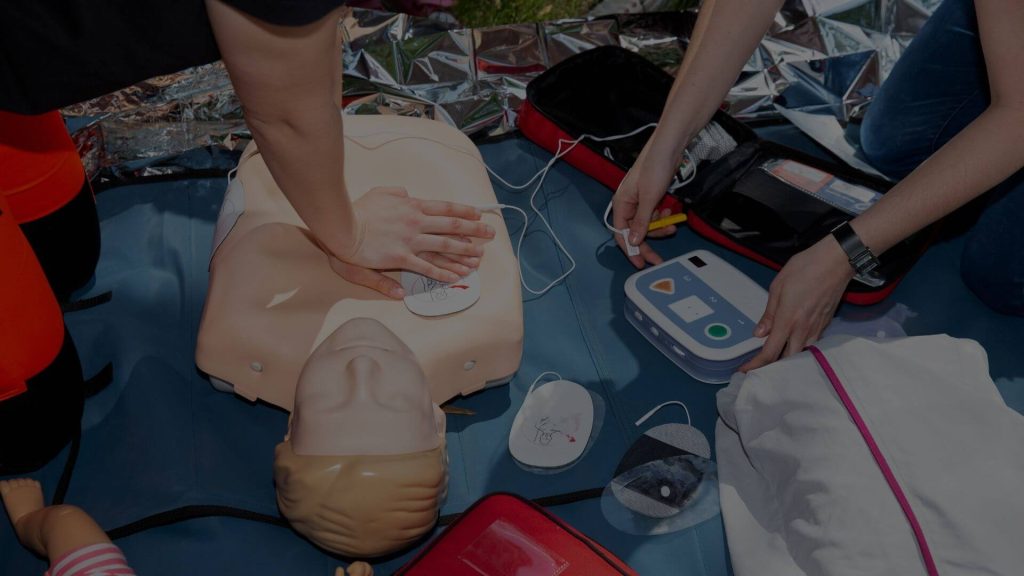
During CPR, you place the heel of your hand on the center of the chest (on the lower half of the breastbone, or sternum) and press down firmly and quickly. These compressions:
- Squeeze the heart between the sternum and the spine.
- Push blood out of the heart and into the arteries.
- Help deliver oxygen to the brain and vital organs.
To do this effectively in an adult, guidelines recommend:
- Depth: About 5–6 cm (2–2.4 inches).
- Rate: 100–120 compressions per minute.
- Full recoil: Let the chest come back up after each push.
That much movement requires real force – often more than people expect.
Why ribs and cartilage may break?
The ribs are curved bones that form a cage around the lungs and heart. They are connected in front to the sternum by cartilage. During CPR:
- The sternum moves downward with each compression.
- The ribs and cartilage must bend and flex.
- If the force is high, or the bones are fragile, something can give way.
Common injuries include:
- Rib fractures – cracks or complete breaks in the rib bones.
- Sternal fractures – breaks in the breastbone itself.
- Separation of ribs from the sternum (costochondral separation).
These injuries can be painful and may cause complications like bruising or, rarely, damage to internal organs. But remember: they happen after we choose to try to save a life.
Who is more likely to get broken ribs from CPR?
Certain groups are at higher risk if you’re asking “will CPR break ribs?”:
- Older adults, especially those with osteoporosis (weaker, thinner bones).
- People with existing bone disease or long-term steroid use.
- People with very small or frail chests.
- People who received prolonged CPR (many minutes of compressions).
On the other hand, CPR on children and infants uses different techniques and shallower depths, and rib fractures are less common when done correctly (though still possible).
Does deeper CPR always mean more broken ribs?
Research suggests that deeper compressions are linked with more injuries, but they also tend to improve blood flow and survival. Modern guidelines aim to balance:
- Enough depth to be life-saving.
- Not so much depth that you cause unnecessary damage.
This is why training focuses on the 5–6 cm depth, proper hand placement, and straight arms.
Advantages & Disadvantages of CPR on Ribs
If you are worried about CPR and ribs, it helps to weigh the advantages & disadvantages of CPR on ribs in a clear way.
Advantages: Why CPR is worth the risk
Even if does CPR break ribs? sometimes, CPR offers major life-saving benefits:
- Saves lives
- CPR can double or triple a person’s chances of survival in some cardiac arrest situations when started early and done properly.
- Without CPR, most people in cardiac arrest do not survive until hospital.
- Buys time until advanced care arrives
- Chest compressions keep blood and oxygen moving.
- This protects the brain and heart until defibrillation or advanced life support is available.
- Broken ribs are treatable; death is not
- Rib fractures are painful but can usually be managed with rest, pain control, and medical follow-up.
- A person who dies because no one did CPR has no second chance.
- Signs of effective effort
- Sometimes, rib injuries suggest that compressions were deep and forceful enough to be effective, especially in adults with stiff chest walls.
- Protection in the eyes of the law in many places
- In many countries and regions, “Good Samaritan” laws protect lay rescuers who perform CPR in good faith. While laws differ, ribs breaking during CPR usually are not treated as negligence if you followed basic guidelines.
Disadvantages: Risks of CPR on ribs
On the other side, we must honestly discuss the disadvantages of CPR on ribs:
- Rib fractures and pain
- Broken ribs can cause strong pain when breathing, coughing, or moving.
- Multiple fractures can make breathing more difficult.
- Risk of complications
- Severe fractures may lead to complications like pneumothorax (collapsed lung), lung bruising, or internal bleeding, especially if many ribs are broken.
- Rarely, this may require surgery or intensive care.
- Sternal fractures
- The sternum can also break, adding to pain and recovery time.
- Psychological stress for the rescuer
- The person doing CPR may feel guilty or traumatized if they hear a crack or later learn that ribs were broken.
- This emotional impact is real and important.
Balancing both sides
When you put the advantages & disadvantages of CPR on ribs side by side, a key idea appears:
The risk of broken ribs is real, but the risk of death without CPR is much greater.
So, when you ask “does CPR break ribs?”, a more helpful follow-up question is: “Is it still worth doing CPR?”
For almost all emergency situations where CPR is recommended, the answer is yes.
Step-by-Step: How to Perform CPR Correctly and Reduce Injury Risk
Knowing how to do CPR properly can help you save a life and possibly lower the risk of unnecessary rib injuries. Here is a simple adult CPR guide (for lay rescuers) based on common international guidelines. Always follow your local training and protocols.
⚠️ Only perform CPR when someone is unconscious and not breathing normally (or only gasping).
Step 1: Check safety and response
- Make sure the area is safe for you and the person.
- Gently tap the person and shout: “Are you OK?”
- Look for normal breathing, not just gasps.
Step 2: Call for help
- If the person is unresponsive and not breathing normally:
- Call your local emergency number (for example, 911, 112, 999, or your country’s number).
- Put your phone on speaker so the dispatcher can guide you.
Step 3: Position your hands correctly
- Expose the chest if possible.
- Place the heel of one hand on the center of the chest, on the lower half of the sternum (breastbone).
- Place your other hand on top, interlocking your fingers.
- Keep your arms straight and shoulders directly over your hands.
Step 4: Give chest compressions
- Press down hard and fast:
- Depth: About 5–6 cm (2–2.4 inches) in adults.
- Rate: 100–120 compressions per minute (about the beat of a fast song).
- Let the chest come all the way back up between compressions.
- Try to minimize pauses.
- If you hear a crack, do not panic. This may be a rib or cartilage, but the person still urgently needs CPR.
Step 5: Add rescue breaths (if trained and comfortable)
If you are trained and willing to give rescue breaths:
- After 30 compressions, open the airway by tilting the head back and lifting the chin.
- Pinch the nose, cover their mouth with yours, and give 1 breath over about 1 second, watching for chest rise.
- Give 2 breaths, then return to compressions.
If you are not trained or not comfortable with breaths, hands-only CPR (continuous compressions) is still very helpful.
Step 6: Continue until help arrives
Keep going with cycles of 30 compressions and 2 breaths (or hands-only compressions) until:
- Emergency help takes over.
- An AED (defibrillator) tells you to stop.
- The person starts breathing normally and moving.
- You are physically unable to continue.
Even when CPR is done correctly, does CPR break ribs? Sometimes, yes. But good technique helps:
- Focus on correct hand position.
- Use your body weight, not just your arms.
- Stay within the recommended 5–6 cm depth, not deeper.
What If You Hear a Crack or Think You Broke a Rib During CPR?
This is one of the biggest emotional barriers for new rescuers who wonder, “will CPR break ribs, and what do I do if I hear it?”
Hearing a “crack” during CPR
If you hear or feel a crack, pop, or snap:
- It may be a rib fracture or cartilage giving way.
- It might also be joint or cartilage noise, not a full break.
- In the moment, you cannot diagnose the exact injury.
Most CPR training organizations and medical experts give the same advice:
Do not stop CPR because of a suspected broken rib.
Unless there is a clear reason to stop (the person wakes up, professionals take over, or the situation becomes unsafe), you should continue compressions. Broken ribs can be treated later; death from cardiac arrest cannot be reversed.
Adjusting your technique
If you suspect you have broken a rib:
- Quickly check your hand position – make sure you are still on the center of the chest, not over a rib or low on the abdomen.
- Maintain the correct depth, but avoid bouncing or twisting movements.
- Keep your arms straight and your shoulders directly over the chest to apply even pressure.
This helps keep does CPR break ribs? from becoming “does CPR cause unnecessary additional injury?”
After CPR: medical evaluation
If the person survives and wakes up:
- A doctor will usually examine them, and may order X-rays or CT scans if rib fractures are suspected.
- Pain from broken ribs is managed with medication, breathing exercises, and sometimes supportive devices.
- Serious complications are relatively uncommon, but they do exist, so close monitoring is important.
Your feelings as a rescuer
It’s normal to feel:
- Worried that you “hurt” the person.
- Guilty or upset about the crack you heard.
- Stressed when thinking back to the event.
Remember:
- The real alternative to your actions might have been no CPR at all.
- You gave that person a chance to live, even if does CPR break ribs? became true in their case.
- Talking to a healthcare professional, counselor, or support hotline can help if you feel distressed afterward.
Healing, Legal Concerns, and Long-Term Outlook After CPR-Related Rib Fractures
If ribs do break during CPR, what happens next? Let’s look at healing and legal aspects, because many people who ask “does CPR break ribs?” also worry about being blamed or sued.
Healing of broken ribs after CPR
Most simple rib fractures:
- Heal on their own over 6–8 weeks, sometimes longer in older adults.
- Are treated with pain control, rest, and breathing exercises to prevent lung infections.
In more serious cases with many broken ribs or flail chest, patients may develop:
- Pneumonia
- Respiratory problems
- Need for intensive care or even surgery to stabilize the ribs
These complications are serious, but again, they affect people who would have likely died without CPR. The fact that they are alive to face these problems is, in many cases, because someone did not hesitate to start compressions.
Legal concerns: Am I in trouble if I break someone’s ribs with CPR?
Legal rules differ by country and region, but in many places:
- Good Samaritan laws protect laypeople who give emergency help in good faith.
- Breaking ribs while performing CPR according to training is usually considered an acceptable and expected risk.
Courts and medical experts generally understand that does CPR break ribs? is a known side effect, not proof of wrongdoing.
To be safer legally:
- Act honestly and in good faith.
- Follow the basic steps you were taught or guided to do by the emergency dispatcher.
- Do not perform risky procedures you were not trained for.
If you have local concerns, you can ask about CPR and liability in your country at a first-aid course or from local health authorities.
Why you should still learn and use CPR?
Even after reading all about the advantages & disadvantages of CPR on ribs, the most important action you can take is:
- Get trained in CPR and first aid.
- Refresh your skills regularly.
- Encourage friends, family, and co-workers to learn too.
The more people are trained and willing to act, the more lives can be saved – even if the honest answer to “does CPR break ribs?” remains “yes, sometimes.”
Quick FAQs About CPR and Ribs
No. While rib fractures are common, they do not happen in every case. Some studies show rib injuries in around one-third of patients, others higher, but it is not guaranteed.
Yes, older adults and people with osteoporosis are more likely to suffer rib fractures because their bones are more fragile.
Not exactly, but they can be a sign that compressions are strong and deep. You should aim for proper depth and hand position, not for cracking sounds.
No. You should not stop CPR just because you suspect a rib fracture. Only stop if the person recovers, professionals take over, or the scene becomes unsafe.
No. If a person is in cardiac arrest, waiting without CPR greatly lowers their chance of survival. Starting CPR immediately is far more important than avoiding possible rib injuries.
Final Thoughts
So, does CPR break ribs?
- Yes, it can, and in many adult cases it does.
- No, that does not mean you should avoid doing CPR.
When someone’s heart has stopped, your main goal is to save their life. Broken ribs are a serious but acceptable side effect of strong, life-saving chest compressions. If you worry “will CPR break ribs?”, try to reframe the thought:
“I might break a rib – but without my CPR, this person might die.”
Learn CPR from a certified instructor, practice regularly, and remember: in a real emergency, your decision to act could be the difference between life and death, ribs or no ribs.