Content Attributes
When you land on the best api search company’s homepage, you’re not only looking at a website—you’re looking at a “trust shortcut.” In most cases, you will decide in 30–60 seconds whether the provider is credible, fast, and developer-friendly. Many Bing results and industry write-ups highlight this same idea: the homepage is the first (and sometimes only) chance to prove value, reduce confusion, and get developers to try the API quickly.
A strong best api search company’s homepage makes three things instantly clear:
- What the API does (in one simple line)
- Who it’s for (developers, product teams, enterprises, startups)
- How fast you can test it (live demo, quickstart, free tier)
This matters because “API search” can mean different things: web search APIs (like Bing search endpoints), SERP scraping APIs, site search / search-as-a-service, or enterprise search APIs. A good homepage reduces this confusion by showing use-cases, examples, and clear calls-to-action (CTAs). Microsoft’s Bing Search API announcements, for example, emphasize capabilities (web, images, news, videos) and developer accessibility—exactly the sort of clarity users expect from the best api search company’s homepage.
At the same time, modern buyers care about more than features. They care about reliability, security, compliance, pricing transparency, and long-term support. Many API company homepages that rank (or discuss ranking) repeatedly mention:
- Low latency and real-time data
- High availability / uptime
- Strong documentation and easy onboarding
- Security and key protection practices
- Clear pricing and plan limits
So, if your goal is to pick the right provider quickly, you shouldn’t only compare “features.” You should compare the signals on the best api search company’s homepage that prove those features are real. In the next sections, you’ll learn the exact checklist to do that—using easy language and practical examples.
What the best api search company’s should show in the first 10 seconds?
The first 10 seconds decide whether a visitor stays. The best api search company’s homepage typically follows a predictable structure—because it works.
1) A clear one-line promise (no buzzwords)
Your first question is: What problem does this API solve? Homepages that rank well tend to lead with a direct promise like “search the web,” “search your documents,” or “real-time SERP results.” For example, search-as-a-service providers often describe web-scale or full-text search delivered via an API.
If the headline is vague (“AI-powered synergy for your workflows”), it’s a red flag. The best api search company’s homepage uses plain language.
2) A fast path to “Try it now”
A major pattern across top pages is reducing friction:
- Live demo (run an API call right on the website)
- Free tier (no credit card to start)
- Quickstart (5 minutes to first request)
For example, API Ninjas highlights live demos and thorough documentation, and that kind of direct “try it” path is exactly what you want from the best api search company’s homepage.
3) Documentation access from the homepage
If you can’t find docs in one click, that’s a problem. The best api search company’s homepage makes it obvious:
- Docs button in the top navigation
- Example request/response snippets
- Error code overview (or link)
- SDK links (when available)
This is important because it proves the platform is built for developers, not just marketing.
4) Credibility signals that feel real
Many pages that discuss “best API search company homepage” topics emphasize trust-building signals such as:
- Customer logos / testimonials
- Use-case pages
- Performance claims (ideally with proof)
- Security posture (how keys/data are protected)
A helpful credibility pattern is specificity. “99.9% uptime” is better than “high reliability.” Even better: a public status page or SLA details.
5) Clear positioning: what “search” means here
Search can be:
- Web search API (webpages, images, news, etc.)
- Custom search (restricted domains)
- Site search / hosted search / search-as-a-service
- Enterprise knowledge search
- SERP API for scraping results
A homepage should quickly tell you which one it is. Bing’s own posts outline these categories (web, images, news, videos; plus custom search).
If the provider can’t define it clearly, it’s unlikely to be the best api search company’s homepage for serious use.
How to compare providers using an easy scoring checklist?
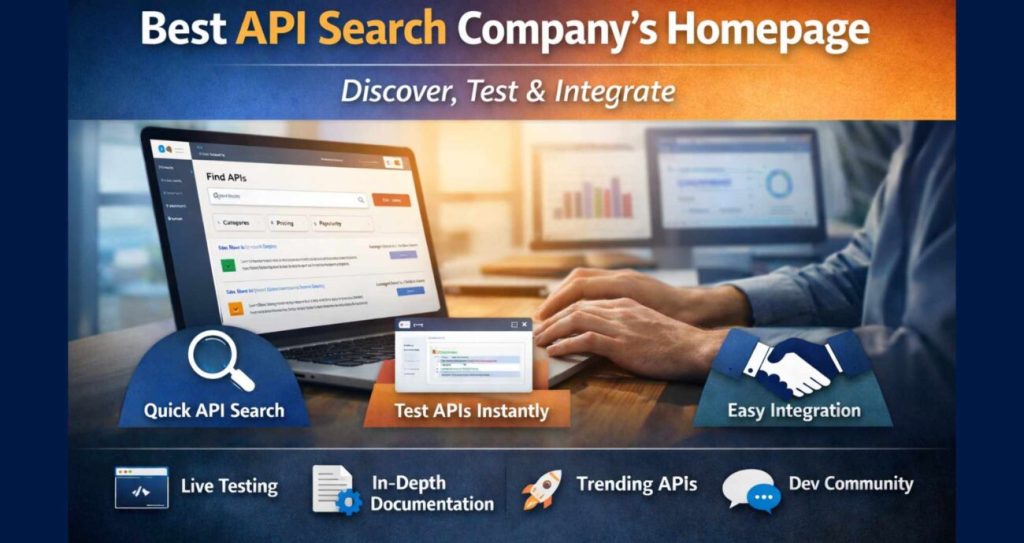
To choose the best api search company’s homepage experience (and the product behind it), use a scoring approach. Don’t worry—this is simple.
A) Developer Experience (DX) score (0–10)
Check for:
- Time to first call: Can you make a request in minutes?
- Examples: Copy-paste code snippets
- SDKs: Popular languages covered
- Error handling guidance: Clear, practical troubleshooting
- Sandbox / demo: Safe testing environment
Many results emphasize demos, docs quality, and onboarding speed because they reduce friction and improve adoption—common traits of the best api search company’s homepage.
Quick win tip: If the homepage shows a working API call example (request + response), add points.
B) Reliability & Performance score (0–10)
Look for:
- Latency claims (with region info if possible)
- Uptime claims or SLA
- Rate limits explained clearly
- Real-time vs cached data details (very important for SERP-related APIs)
Some SERP/API discussions stress minimal delay and “live state” data as key differentiators.
If a homepage talks about speed but never explains limits, freshness, or retries—be careful. The best api search company’s homepage typically makes performance expectations clear.
C) Security & Compliance score (0–10)
Security shouldn’t be hidden.
Check for:
- API key safety guidance
- Authentication methods
- Abuse protection (rate limiting, quotas)
- Mentions of enterprise security options (SSO, audit logs, IP allowlists) if relevant
General API security best practice is to protect and inventory APIs and treat them as real attack surfaces; serious providers address this clearly.
The best api search company’s homepage should at least show that security is part of the product, not an afterthought.
D) Pricing clarity score (0–10)
Good pricing pages:
- Show free tier limits
- Explain what happens when you exceed limits
- Provide plan comparisons
- Clearly define units (requests/day, requests/month, credits)
If you can’t understand the cost in 2–3 minutes, it’s not the best api search company’s homepage for practical buying decisions.
E) Use-case fit score (0–10)
A homepage should show real use-cases, such as:
- E-commerce search
- Content / documentation search
- Competitive research / SERP monitoring
- Enterprise knowledge search
Search-as-a-service explanations often emphasize how managed search improves productivity and decision-making in enterprise contexts.
The best api search company’s homepage will help you self-identify: “Yes, this is for my exact situation.”
Best-practice homepage structure that wins trust, SEO, and conversions
If you’re building or improving a best api search company’s homepage (or judging one), here’s what consistently works—based on recurring elements across ranking pages and industry explanations.
1) Above-the-fold layout that answers 3 questions
A strong hero section answers:
- What does it do?
- Who is it for?
- How do I try it?
This is a repeated theme in pages discussing how “best API search company homepages” earn credibility through clarity, structure, and reduced buzzwords.
Recommended hero components:
- One-sentence value proposition
- 2–4 bullet benefits (speed, relevance, coverage, ease)
- Primary CTA: “Get API Key” / “Try Demo”
- Secondary CTA: “Read Docs”
2) A “proof” section right after the hero
The best api search company’s homepage doesn’t just promise— it proves.
Proof can include:
- Short case studies
- Real metrics (uptime, latency)
- Trusted customer logos
- Public roadmap / changelog links
For example, official announcements for web search APIs often emphasize scale and production readiness, which is a trust signal. (Bing Blogs)
3) Clear documentation and quickstart path
Put this early—don’t hide it.
- “Quickstart in 5 minutes”
- Sample request/response
- Link to authentication guide
- Link to limits & pricing
This mirrors what developer-centric pages push: rapid onboarding and immediate experimentation.
4) Security section that is specific
Avoid vague lines like “we take security seriously.”
Instead, the best api search company’s homepage may mention:
- Encryption in transit
- Key rotation practices
- Rate limiting & abuse detection
- Enterprise controls (if offered)
Security product pages in general stress demonstrating how APIs are inventoried and protected; use that mindset when judging a provider.
5) GEO and global readiness signals
For global users, location matters. A strong best api search company’s homepage often clarifies:
- Regions supported
- International latency expectations
- Local data rules (when applicable)
- Multi-currency billing or local payment options (if relevant)
Even if the homepage doesn’t list every region, it should show the provider understands global usage and availability.
6) Common homepage mistakes to avoid
Several “best homepage” articles list patterns that reduce trust, such as:
- Vague marketing language
- No examples
- Docs hard to find
- Confusing onboarding
- Overuse of buzzwords
If you spot these issues, it’s unlikely you’re looking at the best api search company’s homepage experience.
FAQs: Quick answers people search for
It should help you understand the product instantly, verify trust signals (docs, pricing, uptime, security), and try the API quickly with minimal friction.
The homepage should explicitly say what “search” means and show relevant examples. Bing’s documentation/announcements highlight categories (webpages, images, news, videos) and custom search options, which is a good model for clarity.
Yes—ideally request/response samples and quickstart steps. This reduces adoption time and helps developers test immediately.
Not always. Search-as-a-service usually means managed search for your own content (sites, docs, enterprise knowledge), delivered via hosted infrastructure and APIs.
Conclusion: How to choose confidently?
To pick the best api search company’s homepage (and the right platform behind it), don’t get distracted by fancy design alone. Focus on clarity, speed-to-try, docs quality, transparent pricing, and real trust signals. The best pages make it easy to understand what “search” means, test the API quickly, and estimate real cost and limits before you commit.
Use this simple decision flow:
- If you can try a live demo + find docs in one click, you’re on a strong track.
- If performance claims are specific and explained, even better.
- If security is clear and practical, it’s enterprise-ready.
- If pricing is transparent, you’ll avoid unpleasant surprises.
That’s what separates an average landing page from the best api search company’s homepage—and it’s how you choose faster, with fewer risks.





Leave a Reply
You must be logged in to post a comment.