Content Attributes
The nation of Brunei the Abode of Peace is a small, independent country on the northern coast of Borneo in Southeast Asia. Its official Malay name is Negara Brunei Darussalam. The word Darussalam comes from Arabic and means “abode of peace”, reflecting the country’s reputation for stability, safety and a calm way of life. In English, the formal long name is literally “Nation of Brunei, the Abode of Peace”.
Brunei is bordered by the Malaysian state of Sarawak and faces the South China Sea. It is unique because it is the only fully sovereign country on the island of Borneo. The capital city, Bandar Seri Begawan, is known for its golden-domed mosques, water village, and quiet, clean streets. Despite its small size, Brunei is one of the world’s wealthier nations thanks to its rich oil and natural gas resources, which form the backbone of its economy.
When people ask, “Abode of peace – which country?”, the answer is Brunei Darussalam. Over time, this phrase has become part of the country’s identity and tourism branding. Official tourism campaigns invite visitors to “step into the Abode of Peace” and highlight its peaceful society, strong family values, and unspoiled nature.
The nation of Brunei the Abode of Peace is an Islamic monarchy ruled by the Sultan. The majority of citizens are Malay Muslims, and Islam plays a central role in public life, but other religions are allowed and respected. The local culture combines Malay traditions, Islamic values, and modern amenities. Visitors will find modern shopping centers, luxury hotels and good infrastructure existing alongside traditional stilt houses in Kampong Ayer, the famous water village.
Brunei’s peaceful image is also linked to its low crime rate and political stability. The government focuses on social welfare: citizens enjoy subsidized healthcare, education and housing, supported by oil revenues. At the same time, the leadership promotes conservation of the country’s rainforest and marine environment. A large part of Brunei remains covered in dense tropical forest, giving nature lovers the chance to see rare wildlife and pristine rivers.
For many travelers, the phrase abode of peace perfectly describes how Brunei feels: quiet, green and slow-paced compared to busier Southeast Asian destinations. This introduction gives a first look at why the Nation of Brunei, the Abode of Peace stands out and why it is worth learning more about its history, culture and attractions.
History and Meaning Behind “Abode of Peace”
To understand why the nation of Brunei the Abode of Peace carries such a dignified title, it helps to look at its history and the meaning of its name. Brunei’s story goes back many centuries. Early Chinese records mention a wealthy kingdom on Borneo’s north coast, and by the 15th–16th centuries Brunei was a powerful maritime sultanate controlling much of coastal Borneo and parts of the Philippines.
The word “Brunei” likely comes from local expressions that roughly mean “that’s it” or “there,” said when the first ruler found the right place to settle. Over time, the kingdom adopted Islam, and sultans ruled from the capital near the Brunei River. After periods of decline and foreign pressure, Brunei became a British protected state in the late 19th century. It later gained full independence on 1 January 1984, with the current Sultan Hassanal Bolkiah as head of state.
The phrase “Darussalam”, meaning “Abode of Peace”, comes from Arabic and is often used in Islamic tradition to describe a safe, harmonious place. In Brunei’s full Malay name, Negara Brunei Darussalam, the word Negara means “country” or “nation,” and Darussalam highlights the vision of a peaceful Islamic state. This name appears in official documents, diplomatic lists and international organizations.
So when people search “Abode of peace which country”, they are essentially looking for this full official title. The answer is:
The country known as the “Abode of Peace” is Brunei Darussalam, officially called the Nation of Brunei, the Abode of Peace.
The “abode of peace” concept is not only symbolic. Brunei has avoided many of the conflicts that affected other parts of the region. The government promotes peace, stability, and regional cooperation as key elements of its foreign policy, including active participation in ASEAN and the Commonwealth.
Today, the nation of Brunei the Abode of Peace uses this identity in its tourism campaigns. Official tourism materials describe Brunei as a place where visitors can relax in safety, enjoy calm landscapes, and experience a welcoming Islamic culture. Phrases like “step into the Abode of Peace” emphasize tranquillity, family-friendly attractions and respectful social norms.
Key historical points that shaped modern Brunei include:
- Golden age of the Bruneian Sultanate: Control of major trade routes and coastal regions in Borneo and beyond.
- Colonial era and protectorate status: British advisers helped manage external affairs while the Sultan kept internal authority.
- Oil discovery in 1929: Petroleum and gas transformed Brunei into a wealthy modern state.
- Independence in 1984: Brunei joined the United Nations and other international bodies as a fully sovereign nation.
All of these steps led to the modern Nation of Brunei, the Abode of Peace, a country that combines deep tradition with natural wealth and modern comfort, yet still keeps the idea of peace at the center of its identity.
Culture, Lifestyle and Natural Beauty in Brunei Darussalam
The nation of Brunei the Abode of Peace may be small, but it has a rich culture and surprisingly diverse landscapes. Most citizens are ethnic Malay Muslims, and Malay customs, Islamic values and royal traditions shape daily life. At the same time, there are significant Chinese and other minority communities, plus many expatriate workers, making society more multicultural than it may appear at first glance.
Everyday life and traditions
In Bruneian culture, family and community are very important. Many people live in extended families, and festivals such as Hari Raya Aidilfitri (end of Ramadan) are major events. During these celebrations, the Sultan’s palace, Istana Nurul Iman, opens to the public for a few days, and locals line up to greet the royal family.
Some key cultural features include:
- Malay language as the official language, but English is widely used, especially in business and education.
- Islamic dress code is modest, especially in government offices and religious sites.
- Hospitality: visitors are often welcomed with smiles, food, and invitations to family events.
- Cuisine: dishes like ambuyat (a sago-based staple eaten with dips), satay, curries, and seafood show influences from Malay, Chinese, and other regional cuisines.
Iconic architecture – mosques and water villages
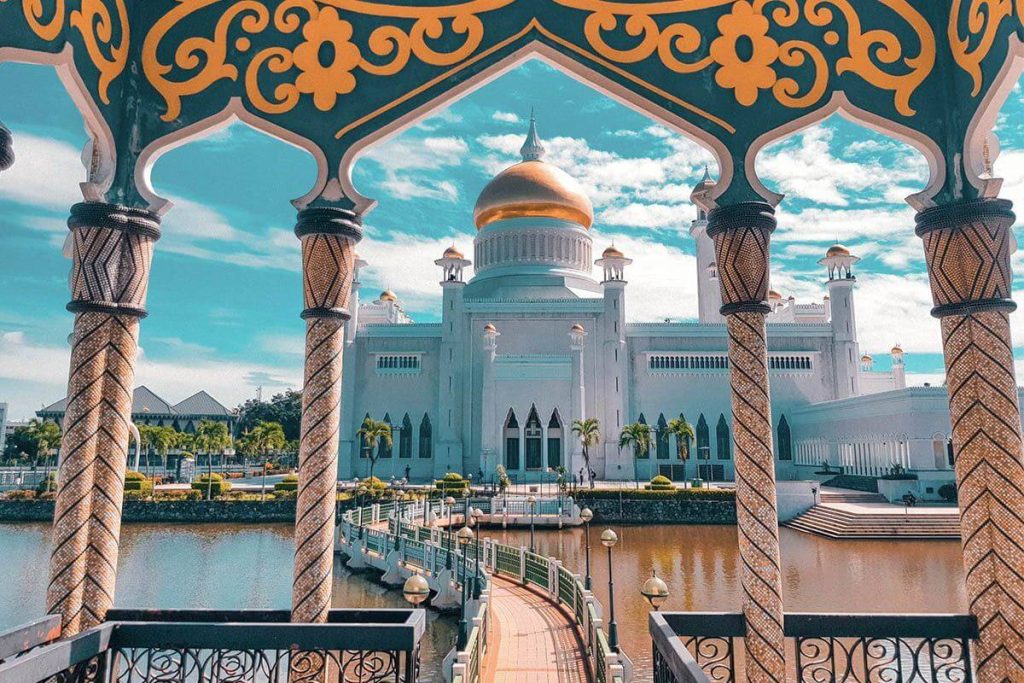
Brunei is famous for its magnificent mosques. The Sultan Omar Ali Saifuddien Mosque in the capital is often described as one of Southeast Asia’s most beautiful mosques, with a golden dome, marble minarets and a man-made lagoon. Another key landmark is the Jame’ Asr Hassanil Bolkiah Mosque, with multiple golden domes and elaborate fountains. These sites are not only places of worship but also symbols of the country’s identity as an abode of peace.
Opposite the modern city center lies Kampong Ayer, the “Venice of the East.” This centuries-old water village sits on stilts above the Brunei River. Wooden walkways, boat taxis and traditional houses show how people have lived here for generations. Tourists can take boat tours, visit local homes and see schools, mosques and shops all built over water.
Natural attractions – rainforests and rivers
The nation of Brunei the Abode of Peace has made a strong effort to protect its environment. Much of the country is still covered by primary rainforest, home to hornbills, gibbons, butterflies and the famous proboscis monkey with its distinctive large nose.
Some key natural attractions include:
- Ulu Temburong National Park – a pristine rainforest reserve reached by boat, known for canopy walks, waterfalls and eco-lodges.
- Muara and Serasa beaches – quiet coastlines popular for picnics and sunset walks.
- Tasek Lama and other urban parks – green spaces near the capital where locals hike and exercise.
Overall, Brunei’s culture and nature support its title as an abode of peace. The country feels calm, with a strong sense of order, religious devotion and respect for the environment. Visitors who come with an open mind will find that the Nation of Brunei, the Abode of Peace offers a gentle but deeply interesting experience.
Economy, Modern Development and Quality of Life
The nation of Brunei the Abode of Peace is often described as small but rich. Its prosperity comes mainly from oil and natural gas reserves discovered in the early 20th century. Fields such as Seria and offshore gas projects provide most of the government’s revenue and a large share of exports.
Oil wealth and government support
Because of this hydrocarbon wealth, Brunei has:
- One of the highest GDP per capita figures in Asia.
- Generous subsidies for fuel, rice and some utilities.
- Free or low-cost healthcare and education for citizens.
- A relatively low tax burden – for many years, citizens paid no personal income tax.
These factors support a high standard of living and help maintain social peace. Good roads, reliable electricity and clean water are normal even outside the capital. The government also invests abroad through the Brunei Investment Agency, diversifying income for future generations.
Balancing tradition and modernity
The nation of Brunei the Abode of Peace follows a national philosophy called Malay Islamic Monarchy (MIB). This concept stresses three pillars: Malay culture, Islam as the official religion, and loyalty to the monarchy. Laws mix English common law with Islamic legal principles, and in some areas, Islamic criminal codes have been introduced.
In everyday life, this balance appears in many ways:
- Modern shopping malls and international brands sit next to traditional markets and street stalls.
- Young people use smartphones and social media, but still respect family elders and religious customs.
- Government buildings and financial districts exist beside royal palaces and classic mosques.
The result is a society that feels ordered and conservative, yet relatively comfortable and well-equipped with modern services.
Tourism and diversification
Because Brunei relies heavily on hydrocarbons, the government is trying to diversify the economy. Tourism is a growing focus. The country markets itself as a peaceful, “green and gold” destination with luxury hotels like the Empire Brunei, eco-tourism in Ulu Temburong and cultural experiences in the capital.
The tourism board promotes the Abode of Peace brand through:
- Online travel guides and brochures highlighting attractions, food and events.
- Campaigns encouraging short stays for transit passengers and regional visitors.
- Partnerships with airlines, especially Royal Brunei Airlines, which positions the country as a quiet hub between Asia, Australia and the Middle East.
Quality of life and safety
For residents, the nation of Brunei the Abode of Peace offers several advantages:
- Low crime rate and strong community networks.
- Clean, uncrowded cities compared with other regional capitals.
- Access to parks, beaches and forests within short travel distances.
- Social services funded by oil and gas revenues.
At the same time, some people, especially younger generations, seek more entertainment and nightlife than Brunei currently offers. Many travel to nearby Malaysian cities for concerts, shopping or weekend trips. Travel bloggers often comment that Brunei feels very quiet, which some tourists love and others find too calm.
Still, from an economic and social point of view, Brunei lives up to its name as an abode of peace: a calm, secure place where most citizens enjoy decent living standards supported by natural resource wealth and careful management.
Travel Guide: Visiting the Nation of Brunei, the Abode of Peace
If you are thinking about visiting the nation of Brunei the Abode of Peace, you’ll find a destination that is easy to explore, welcoming and safe. Here is a simple travel guide based on information from official tourism sites, travel advisories and real traveler experiences.
How to get there and entry basics?
Most visitors arrive by air at Brunei International Airport in Bandar Seri Begawan. Royal Brunei Airlines and several regional carriers connect Brunei to major cities in Asia and the Middle East. Travelers must complete an online E-Arrival Card before entering, and many nationalities can enter visa-free for short stays (up to 90 days), though rules depend on your passport. Your passport should have at least six months of validity. Always check the latest requirements before your trip.
Best time to visit
Brunei has a tropical climate, hot and humid all year, with frequent rain but no true “winter.” Many visitors choose the relatively drier months between February and April, but you can travel year-round if you don’t mind occasional showers.
Top things to see and do
When you step into the abode of peace, don’t miss these highlights:
- Sultan Omar Ali Saifuddien Mosque – Visit during the day for interior tours (respecting dress rules) and in the evening when the golden dome reflects beautifully on the lagoon.
- Jame’ Asr Hassanil Bolkiah Mosque – The largest mosque in Brunei, with many golden domes, fountains and a grand staircase.
- Kampong Ayer – Take a water taxi to explore this historic stilt village, visit small museums, and see daily life on the river.
- Ulu Temburong National Park – Join a tour with boat rides, jungle trekking and a canopy walkway high above the rainforest.
- Istana Nurul Iman (from outside) – While the palace is normally closed, it forms an impressive sight from the river and opens to the public briefly during Hari Raya.
- Gadong Night Market – Try local food, snacks and drinks in a lively but family-friendly environment.
Practical tips for a peaceful visit
To enjoy the Nation of Brunei, the Abode of Peace comfortably:
- Dress modestly, especially in mosques and government areas. Shoulders and knees should be covered; women may be asked to wear headscarves in some religious sites.
- Avoid public drinking, as alcohol sale is restricted and public drunkenness is not tolerated. Non-Muslim visitors can bring in small amounts of alcohol for private use, subject to strict limits.
- Respect prayer times; some shops close briefly during major prayers on Fridays.
- Use taxis, ride-hailing apps, or hotel transfers, as public transport is limited.
Suggested 2-day itinerary
Day 1 – City and culture
- Morning: Visit Sultan Omar Ali Saifuddien Mosque and walk around its lagoon.
- Midday: Explore Kampong Ayer by boat, including a stop at a local house.
- Afternoon: See museums or the Royal Regalia Museum to learn about the Sultanate.
- Evening: Eat local dishes at Gadong Night Market.
Day 2 – Nature and peace
- Morning: Take a tour to Ulu Temburong National Park for jungle trekking and canopy walk.
- Afternoon: Return to the city, relax at a café or shop for souvenirs.
- Evening: Visit Jame’ Asr Hassanil Bolkiah Mosque at sunset for night photos.
This simple plan lets you feel why Brunei is called the Abode of Peace – from quiet mosques to untouched rainforests – without rushing.
FAQ About the Abode of Peace (short section)
The phrase “Abode of Peace” refers to Brunei Darussalam, whose full official English name is Nation of Brunei, the Abode of Peace.
Yes. Brunei is generally considered very safe, with low crime and stable politics. Most travel advisories describe it as a calm, low-risk destination.
The name reflects its Islamic heritage, focus on peace and stability, and the desire to present the country as a harmonious, secure place to live and visit.
Brunei is known for its oil and gas wealth, golden-domed mosques, water village, preserved rainforests and generous social welfare system.
Many visitors stay 2–3 days, which is enough to see the main sights. Nature lovers may stay longer to enjoy more of the rainforest and quiet beaches.
Final Thoughts
The nation of Brunei the Abode of Peace is a unique blend of tradition, wealth, nature and calm. Its official title is more than just words: it describes a real atmosphere of safety and serenity. From golden mosques to deep green forests, from quiet streets to friendly markets, Brunei offers a gentle travel experience that feels very different from typical noisy tourist hubs. For anyone searching “abode of peace which country”, the answer leads to a small but remarkable nation on Borneo – Brunei Darussalam, the true Abode of Peace.