Content Attributes
If you are a student of Hindi, Sanskrit, literature, drama, or dance, you will often see questions like “What is Adbhut Ras?” or “Write an easy example of Adbhut Ras.” These questions look simple, but many students get confused between fear, surprise and wonder. In this guide, we will understand the basic idea of Adbhut Ras and then give you many easy example of Adbhut Ras that you can directly use in exams, homework, or class activities.
In Indian aesthetics, especially in texts like Natyashastra, the concept of rasa describes the emotional flavour or mood created in the audience. There are traditionally eight or nine main rasas, called Navarasa: Śṛṅgāra (love), Hāsya (laughter), Karuṇa (compassion), Raudra (anger), Vīra (heroism), Bhayānaka (fear), Bībhatsa (disgust), Adbhuta (wonder) and later Śānta (peace).
Among these, Adbhut Ras is the rasa of amazement – that special “wow!” feeling. Once you clearly understand this, it becomes very easy to write any easy example of Adbhut Ras in your own words.
What is Adbhut Ras? (Simple Definition)?
Adbhut Ras (or Adbhuta Rasa) is the rasa of wonder, amazement, and surprise. When something extraordinary, magical, or totally unexpected happens and the viewer feels deep awe, that moment belongs to Adbhut Ras.
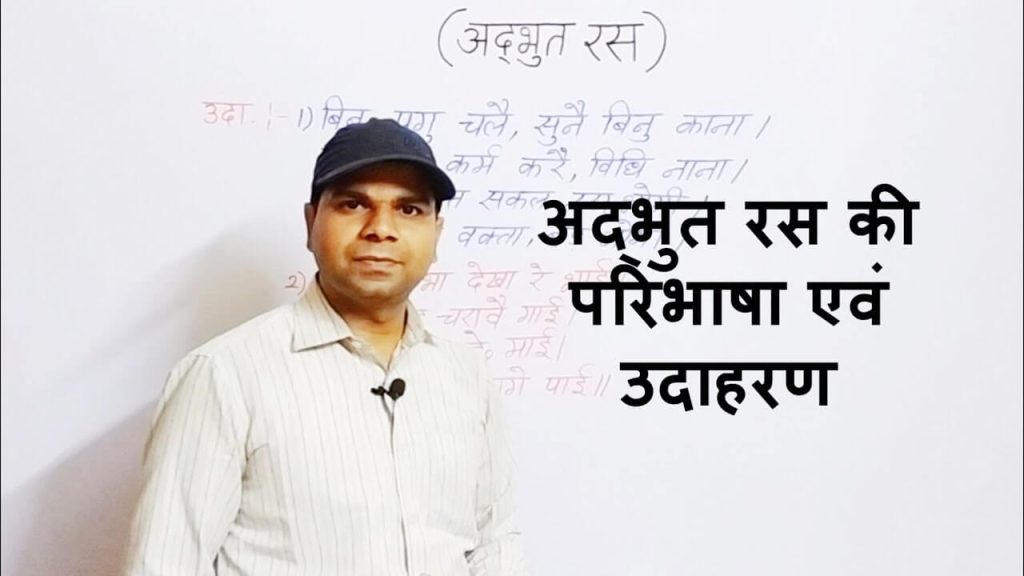
Classical texts explain that each rasa comes from a permanent emotion (sthayi bhava). For Adbhut Ras, this permanent emotion is Vismaya – the feeling of wonder and astonishment.
In simple language:
- Adbhut Ras = feeling of “Wow! I have never seen this before!”
- It appears when we face something rare, magical, or new, like:
- Seeing a shooting star for the first time
- Watching a magician pull a rabbit from an empty hat
- Looking at a huge waterfall or snow-capped mountain
- Seeing a robot or new technology that looks “almost impossible”
Many writers and dancers also describe Adbhut Ras as the marvellous or wonderful sentiment. It is linked to curiosity and mystery – we get silent, our eyes open wide, and we try to understand what is happening.
When exam questions ask, “What is Adbhut Ras?”, you can answer like this in your own words and then give an easy example of Adbhut Ras from daily life, stories, or movies.
Key Features of Adbhut Ras
To recognise or create Adbhut Ras, it helps to know its main features. These come from classical Rasa theory but we’ll keep them very simple.
1. Emotion Behind Adbhut Ras
- Permanent emotion (sthayi bhava): Vismaya (wonder, astonishment)
- We feel small in front of something huge, powerful, or magical
- Our mind becomes silent for a moment – we stop talking and just watch
2. Typical Triggers (Vibhava)
Adbhut Ras is usually triggered when we see or hear something like:
- A grand scene – a palace, a huge temple, a big waterfall
- A magical event – miracle, magic trick, mythological power
- A surprising technology – AI robot talking like a human, 3D hologram
- A new discovery – first time in space, first time under the sea, first time seeing snow
3. Body Language and Expressions (Anubhava)
When a character experiences Adbhut Ras, we usually see:
- Eyes wide open
- Eyebrows raised
- Mouth slightly open in surprise
- Body leaning forward or standing still, frozen
- A soft “Oh!” or “Wow!” or “Areh wah!”
These physical signs show that the person is filled with wonder. So, in a drama, dance, or story description, if you see such reactions, you can easily identify an easy example of Adbhut Ras.
Easy Example of Adbhut Ras in Daily Life
Now let us move to the main demand: easy example of Adbhut Ras which you can remember and write quickly.
Daily Life Example 1 – Child Seeing Snow for the First Time
Imagine a small child who has lived only in a hot city. One day the family visits a hill station in winter. As the car reaches the top, snowflakes start falling gently from the sky.
- The child opens the window, stretches out a hand, and a snowflake melts on the palm.
- The child’s eyes become very big, and the mouth opens slightly.
- The child shouts, “Papa, look! The rain has become white!”
This moment is a perfect easy example of Adbhut Ras. The child has never seen snow before. The experience is new, magical, and beautiful. The main emotion is not fear or sadness, but pure wonder.
How to write this in exam (short answer):
When a child sees snowfall for the first time and watches white flakes falling from the sky with wide eyes and full amazement, Adbhut Ras is created.
Daily Life Example 2 – First Visit to a Planetarium
Another easy example of Adbhut Ras:
- A school takes students to a planetarium.
- Inside the dark dome, suddenly the ceiling becomes full of stars and galaxies.
- Planets move around, and the Milky Way appears very close.
- Students look up silently, some forget to even blink.
Here again, the main feeling is awe. The students are not afraid; they are amazed by the beauty and size of space. That is Adbhut Ras.
Easy Example of Adbhut Ras in Stories and Poems
Exams often ask, “Give literary or poetic easy example of Adbhut Ras.” You can use very simple lines.
Story Example – Discovery of a Hidden Cave
A boy is playing near a mountain and finds a hidden cave. When he enters, he sees:
- Walls full of shining crystals
- A small underground waterfall
- Light entering from a crack above, making the whole cave glow
He stands quietly, completely surprised. The scene is magical but not dangerous. This is an easy example of Adbhut Ras in a story.
You can write something like:
When the hero enters a hidden cave full of shining crystals and sparkling light, and stands silently in amazement, the writer creates Adbhut Ras.
Mythological-Flavoured Example (But in Simple Language)
Think of a scene where a devotee is praying in a temple. Suddenly, the statue of the deity appears to smile softly and a gentle light spreads in the room. The devotee is not afraid; instead, he feels deep wonder and devotion.
This is another easy example of Adbhut Ras, often used in mythological stories.
Easy Example of Adbhut Ras in Movies and TV
Teachers sometimes ask students to give easy example of Adbhut Ras from films or TV shows. As long as you describe the scene clearly and show the feeling of wonder, it is correct.
Movie Example – Fireworks Over a City
- In a movie, a character reaches a city rooftop at night feeling sad and lonely.
- Suddenly, the sky is filled with colourful fireworks – red, green, gold.
- The entire city below lights up, and the character’s face shines with amazement.
- For a moment, all sadness disappears and only the feeling of “Wow, how beautiful!” remains.
This is a modern, urban easy example of Adbhut Ras.
Fantasy Movie Example – Dragon Taking Flight
- A child in a fantasy film sees a dragon for the first time.
- Instead of being afraid, the child watches as the dragon spreads its huge, shining wings and flies gently across the sky.
- The child whispers, “Is it real?” with bright eyes.
This scene also shows Adbhut Ras, because the central feeling is awe at something extraordinary, not terror.
Step-by-Step: How to Identify Adbhut Ras in Any Scene?
Here is a simple step method to help you always recognise or write an easy example of Adbhut Ras.
Step 1 – Ask: Is the Main Emotion Wonder, Not Fear or Anger?
- If the person is trembling, screaming, or trying to escape → that is Bhayānaka Ras (fear), not Adbhut.
- If the person is laughing loudly → that is Hāsya Ras.
- If the person is crying from sadness → that is Karuṇa Ras.
- If the person is quiet, eyes wide, peacefully surprised → then you probably have Adbhut Ras.
Step 2 – Look for Something Extraordinary or Rare
Ask yourself: “What is happening that is unusual?”
- First snowfall, first rocket launch, first time seeing the ocean
- Magical scene, miracle, talking animal, flying carpet
- Huge natural scene – waterfall, rainbow, aurora, star-filled sky
If the event is rare and amazing, it is a good base for an easy example of Adbhut Ras.
Step 3 – Observe the Character’s Reaction
Adbhut Ras appears less in the event and more in the reaction. Watch for:
- Silent awe, widened eyes
- Slightly open mouth
- Slow movements, almost frozen body
- Words like “amazing”, “unbelievable”, “I can’t believe my eyes”
If you see these signs, you have an easy example of Adbhut Ras ready to write.
Step 4 – Describe the Scene in 2–3 Simple Sentences
For exams, you don’t need very long stories. Just follow this formula:
- Where it is happening (place)
- What surprising thing is seen
- How the person reacts in wonder
Example formula for an easy example of Adbhut Ras:
At the seashore, a child sees the ocean for the first time. He looks at the endless water and big waves with wide eyes and forgets to speak. This scene shows Adbhut Ras.
How Adbhut Ras Is Different from Other Rasas?
Understanding the difference helps you choose the right rasa in answers.
- Adbhut vs. Bhayānaka (wonder vs. fear)
- Adbhut: You are surprised but happy or curious.
- Bhayānaka: You are surprised and scared.
- Example:
- Adbhut – Seeing a beautiful lightning show from far away.
- Bhayānaka – Being stuck under thunder and heavy storm, afraid of getting hurt.
- Adbhut vs. Vīra (wonder vs. heroism)
- Adbhut: You admire something amazing.
- Vīra: You feel brave and powerful.
- Sometimes Adbhut Ras can come from heroic actions. For example, watching a hero do an impossible stunt can create amazement (Adbhut) in the audience, even though the hero himself is full of Vīra Ras.
- Adbhut vs. Hāsya (wonder vs. laughter)
- Adbhut: “Wow, I can’t believe this!”
- Hāsya: “Ha ha, that is so funny!”
- A scene can mix both – for example, a clown doing a very clever trick that is funny and also amazing.
When you write about an easy example of Adbhut Ras, always highlight that the main emotion is wonder or amazement, not fear, pure bravery, or only laughter.
Tips for Students: How to Write a Perfect Answer on Adbhut Ras?
Teachers and examiners usually check four things:
- Correct definition
- Clear explanation of feeling (wonder/amazement)
- Simple, relatable example
- Neat, short language
Here’s a sample answer structure you can copy and adjust:
1. Short Definition
Adbhut Ras is the rasa of wonder and amazement. It is created when we see something rare, magical or extraordinary, and our heart is filled with surprise and curiosity.
(Here you are directly answering, “What is Adbhut Ras?”)
2. One or Two Easy Examples
You can choose any easy example of Adbhut Ras from this article, such as:
- Child seeing snowfall for the first time
- Student watching a 3D space show at the planetarium
- Devotee seeing a divine light around an idol
- Tourist seeing a huge waterfall or the Taj Mahal for the first time at sunrise
3. Short Closing Line
In all these moments, the main emotion is “Wow!” – this feeling of wonder is called Adbhut Ras.
If you follow this pattern, you will naturally keep a good keyword balance and give a strong, exam-ready answer on Adbhut Ras and easy example of Adbhut Ras.
FAQs About Adbhut Ras
Adbhut Ras is the rasa of wonder and amazement, created when we see something rare, magical, or extraordinary and feel a deep “wow” inside.
When a child sees fireworks filling the night sky with colours for the first time and stands silently with wide eyes, that is a very easy example of Adbhut Ras.
No. Adbhut Ras does not need a miracle. It can also come from:
1. Seeing a very grand building for the first time
2. Watching a rocket launch
3. Seeing the ocean, mountains, or stars
Anything that makes us feel “This is more than my everyday world” can become an easy example of Adbhut Ras.